
Sussex Spaniel
The Sussex Spaniel is a rare, low-set sporting spaniel developed in Sussex, England to work methodically through thick cover and flush game. They’re known as slow-and-steady workers in the field and as affectionate, loyal companions at home.
In the house, many Sussex are “shadow dogs” that prefer to be near their people. They tend to be calm indoors once their daily exercise and sniffing needs are met, but they are not a decorative lapdog—they were bred to hunt and still benefit from purposeful activity.
Description
The Sussex Spaniel is a charming and distinctive breed known for its friendly demeanor, deep voice, and excellent hunting skills. Originating in the county of Sussex in southern England, this breed was developed primarily for flushing game, especially birds, from dense underbrush. With its keen nose, strong work ethic, and determination, the Sussex Spaniel quickly became a favored companion for hunters in the 19th century. Despite being less well-known today compared to other spaniel breeds, the Sussex Spaniel remains a beloved and dedicated hunting dog with a rich history.
Physically, the Sussex Spaniel is a compact, muscular dog with a strong and sturdy build, typically standing between 13 and 15 inches tall at the shoulder and weighing between 35 and 45 pounds. Its distinctive features include a broad, rounded head, deep-set eyes that give it a soulful expression, and long, floppy ears that frame its face. The breed's dense, wavy coat is usually a rich golden or liver color, and it requires regular grooming to maintain its signature look. The Sussex Spaniel’s thick coat, coupled with its broad chest and muscular body, makes it well-suited to the rugged terrain of the English countryside.
Temperamentally, the Sussex Spaniel is known for its calm, affectionate, and loyal nature. While they are energetic and eager to work when it comes to hunting, they are equally content to relax with their family when not on duty. These dogs are highly social and tend to get along well with other pets and children, making them a good choice for families. Though generally friendly, they can be a bit reserved around strangers, which makes them excellent watchdogs. Their playful yet patient nature makes them good companions for those who are looking for a well-rounded family pet with a loving disposition.
Despite their origins as a working dog, the Sussex Spaniel is a relatively low-energy breed, especially when not engaged in hunting activities. They do require regular exercise to stay healthy, but they are generally content with moderate walks and playtime. Due to their friendly and gentle temperament, they can also thrive as pets in homes where they receive plenty of attention and affection. The Sussex Spaniel’s affectionate personality, coupled with its striking appearance and intelligence, makes it a loyal and endearing companion for those looking for a dog with a rich history and a calm, loving nature.
History
The Sussex Spaniel is a historic and charming breed that originated in the county of Sussex, England, during the late 18th century. It was developed as a hunting dog, specifically designed to flush and retrieve game in dense undergrowth and rough terrain. The breed's low, sturdy build and slow, methodical approach to hunting made it particularly suited for working in thick cover where other dogs might struggle. Its rich golden-liver coat, a hallmark of the breed, provided excellent camouflage in the woods and fields of Sussex.
The breed’s development is credited to Mr. Fuller of Rosehill Park, who established a kennel in the 1800s dedicated to creating a versatile and dependable flushing spaniel. Fuller emphasized the Sussex Spaniel’s unique traits, including its deep, melodious bark (often referred to as "giving tongue") and its ability to work tirelessly at a steady pace. These characteristics set the Sussex apart from faster spaniel breeds, making it a favorite among hunters who valued precision and persistence over speed.
The Sussex Spaniel gained recognition in the early days of organized dog shows, with the breed first appearing at shows in the mid-19th century. However, its popularity waned in the 20th century, particularly after the World Wars, when the breed’s population declined dramatically. By the end of World War II, the Sussex Spaniel was on the brink of extinction, with only a handful of individuals remaining. Dedicated breeders, including Joy Freer, worked tirelessly to save the breed, rebuilding its numbers through careful breeding programs.
Today, the Sussex Spaniel remains a rare breed but is cherished for its unique appearance, friendly temperament, and rich history. While it is still used as a hunting dog in some regions, it is more commonly seen as a loyal and affectionate family companion. The breed’s story is a testament to the resilience of the Sussex Spaniel and the commitment of those who have worked to preserve its legacy as a distinctive and endearing member of the spaniel family.
Sussex Spaniel Hunting Ability and Traditional Roles
Appearance
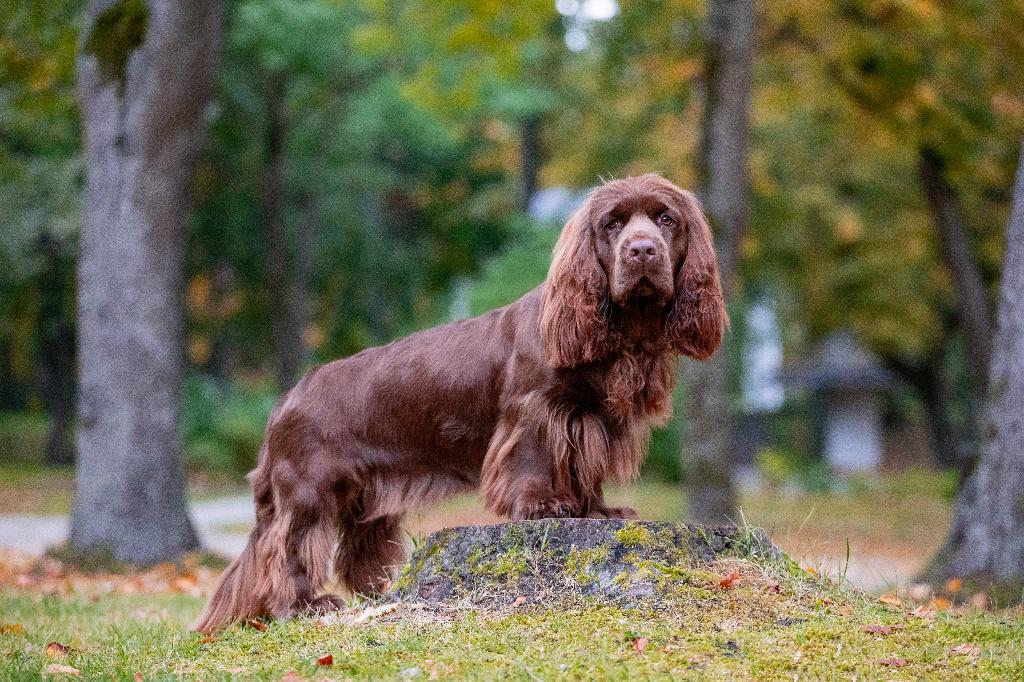
Sussex Spaniels are long and low with a sturdy, rectangular outline, heavy bone, and a notably deep, wide chest. The head is substantial with pronounced brow that can give a serious or “frowning” look, paired with soft, hazel eyes and long, thick, lobe-shaped ears.
The coat is abundant and flat to slightly wavy with feathering on ears, legs, and tail. Breed standards emphasize the distinctive rich golden-liver color; white, if present at all, is generally limited to a small mark on the chest.
Their movement can look like a characteristic rolling gait, a byproduct of the breed’s build. Adult size is typically about 13–15 inches at the shoulder and roughly 35–45 pounds.
Colors
• Golden Liver
Health
Overall, Sussex Spaniels are often described by their breed club as basically healthy, but their rarity makes careful breeder screening especially important. When choosing a puppy, ask what health testing has been done, what results were found, and whether the breeder can share documentation.
The Sussex Spaniel Club of America recommends DNA testing for pyruvate dehydrogenase deficiency (PDP1) and screening for cardiac abnormalities. A basic heart exam (auscultation) is commonly done in puppies, with echocardiography considered if a concern is detected.
As with many medium sporting breeds, joint soundness and healthy weight should be protected throughout life. Maintain lean body condition, build fitness gradually, and work with your veterinarian on an age-appropriate exercise plan—especially during growth.
Care
Plan for regular coat maintenance. The feathering can trap burrs and mat, so a thorough brush/comb a few times per week (and more during shedding seasons) helps keep the coat comfortable and prevents tangles around the ears, legs, and feet.
Because the ears are long and folded, check and clean them routinely and keep them dry after baths or wet outings. Nails should be trimmed regularly, and the hair between the pads may need light tidying to reduce slipping and debris buildup.
Exercise needs are moderate but non‑negotiable: daily walks plus off-leash sniff time in a safe area, nose games, and field-style activities suit them well. Weight control matters in this compact, heavy-boned breed; keep treats measured and adjust meals to body condition.
Training
Sussex Spaniels are usually willing and people-focused, which makes them trainable for many homes. They tend to respond best to calm, consistent sessions using positive reinforcement—food, play, and praise—rather than harsh corrections.
Lean into their strengths: scent work, retriever games, and structured “find it” exercises keep training fun and channel their hunting heritage. Because they can be methodical (and sometimes stubborn), keep sessions short, end on success, and avoid repetitive drilling.
Prioritize early recall, loose-leash skills, and polite greetings. If your dog is naturally vocal outdoors, teach an “enough/quiet” cue and reinforce calm behavior before excitement peaks.
Temperament
Sussex Spaniels are typically even-tempered, affectionate, and steady. Many are gentle with familiar people and tend to bond strongly with the whole household, preferring close contact and routine.
They’re generally friendly but can be a bit reserved at first with strangers. Like many sporting dogs, they often enjoy using their nose and may become very focused when a scent catches their attention.
In the field the breed is traditionally vocal—some Sussex “give tongue” while working scent—which can show up as talkativeness during exciting outdoor moments. Early socialization and clear household expectations help keep that trait in balance.
Lifestyle
A Sussex Spaniel fits best with people who enjoy a steady companion for daily walks, weekend hikes, training classes, or occasional hunting-style outings. They often do well in family life when included in routines, given regular interaction, and not left isolated for long stretches.
They’re generally not “marathon” dogs, but they do need consistent movement and mental work to stay content. Bored Sussex may invent their own jobs—following scents, chewing, or using their voice—so enrichment matters.
Space helps, but more important is access to safe exercise and sniffing opportunities. A securely fenced yard, or frequent trips to appropriate outdoor areas, will make life easier for both dog and owner.
Ownership
Sussex Spaniels are uncommon, so responsible ownership often starts with patience: expect waitlists and thorough breeder conversations. Look for breeders who are involved with the breed community, can explain health testing and temperament goals, and provide lifetime support.
Before committing, consider the practical realities of the breed: regular grooming, a preference for close companionship, and a sporting-dog need for daily activity and training. If you want a more independent or low-involvement pet, a Sussex may feel demanding.
If you do choose the breed, invest early in socialization, reward-based training, and preventive veterinary care. With consistent routines and kindness, Sussex Spaniels typically repay the effort with deep loyalty and a calm, affectionate presence.
Interesting Facts
- Origin: Sussex, England; developed as a field spaniel for flushing game in dense cover.
- Distinctive look: long-and-low, heavy-boned build with a characteristic rolling gait.
- Signature color: rich “golden liver” coat emphasized in breed standards.
- Typical size: about 13–15 inches tall and 35–45 pounds as an adult.
- Breed-club health focus: PDP1 DNA testing and cardiac screening are commonly recommended.
- Working style: can be vocal on scent (“giving tongue”), especially during exciting outdoor work.