
Miniature Dachshund
The Miniature Dachshund is the smaller size of the famously long, low German scent hound originally developed to hunt badgers and other burrowing game. In Germany, size is traditionally defined by chest circumference; in the UK and many other places, “miniature” refers to the smaller size category.
Despite their small stature, Miniature Dachshunds are bold, lively companions with strong opinions and a keen nose. They’re popular family dogs when their hunting instincts and need for consistent training are understood and channeled into safe, fun activities.
Description
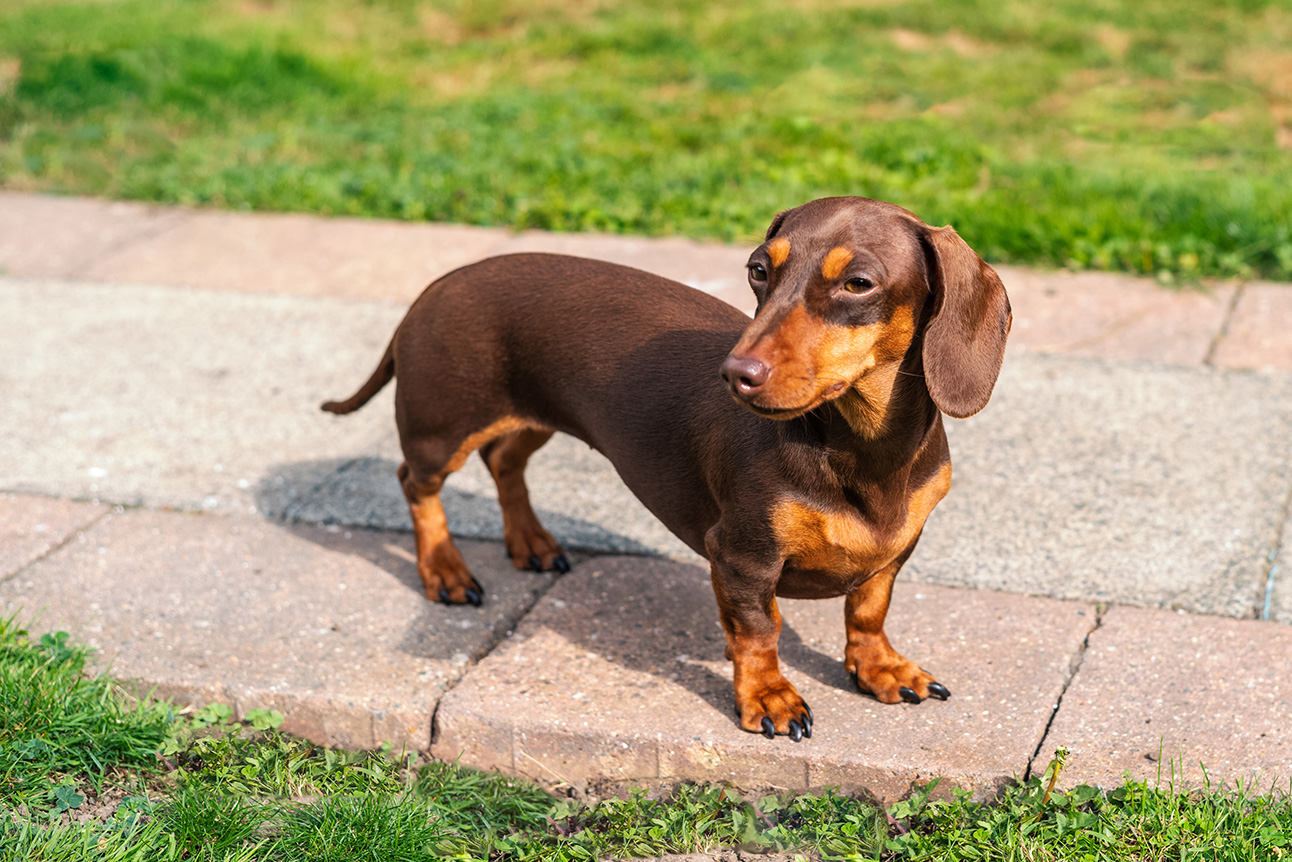
The Miniature Dachshund is a small and spirited breed known for its distinctive long body, short legs, and bold personality. A smaller version of the standard Dachshund, the Miniature typically weighs 11 pounds or less and stands about 5 to 6 inches tall at the shoulder. This breed retains the playful and courageous demeanor of its larger counterpart, making it a delightful companion for those who appreciate a big personality in a small package.
Miniature Dachshunds come in a variety of coat types: smooth, longhaired, and wirehaired, each with its own unique charm. Their coats can be found in a wide range of colors and patterns, including solid red, black and tan, chocolate, dapple, and piebald. Regardless of coat type or color, the Miniature Dachshund's most defining feature is its elongated body, which was originally developed to aid in hunting burrowing animals such as rabbits and badgers.
Despite their hunting origins, Miniature Dachshunds are beloved as affectionate and loyal family pets. They form strong bonds with their owners and thrive on attention and companionship. Their playful and curious nature makes them excellent for interactive games, and they enjoy short walks and outdoor exploration. However, their independent streak and occasional stubbornness can pose a challenge during training, requiring patience and consistent positive reinforcement.
The Miniature Dachshund's small size and adaptable temperament make it suitable for a variety of living environments, from apartments to larger homes with yards. While they are generally good with children and other pets, their hunting instincts may cause them to chase smaller animals. Early socialization and training can help them become well-rounded and confident companions.
With their unique appearance, lively personality, and deep devotion to their families, Miniature Dachshunds have captured the hearts of dog lovers worldwide. Their combination of charm, intelligence, and adaptability makes them a popular choice for individuals and families seeking a small yet spirited companion.
History
The history of the Miniature Dachshund is deeply intertwined with that of its larger counterpart, the Standard Dachshund, a breed with origins tracing back to 15th-century Germany. The name "Dachshund," which translates to "badger dog" in German, reflects the breed’s original purpose as a fearless hunter of badgers and other burrowing animals. While the Standard Dachshund was developed for hunting larger prey, the Miniature Dachshund was bred to hunt smaller game, such as rabbits, and to serve as a versatile hunting companion for German farmers and foresters.
The Miniature Dachshund emerged in the 19th century through selective breeding. Standard Dachshunds were paired with smaller dogs, such as Pinschers or toy terriers, to produce a smaller version that retained the hunting prowess, elongated body, and courageous temperament of the original breed. This smaller size allowed Miniature Dachshunds to navigate smaller burrows and tackle prey that required a more delicate yet determined approach. Despite their smaller stature, Miniature Dachshunds retained their bold and fearless nature, making them highly effective in their roles.
By the late 19th and early 20th centuries, Dachshunds, including the Miniature variety, began to gain popularity as companion animals outside of Germany. Their charming appearance and engaging personalities made them a favorite among European and American households. The breed was introduced to the United States in the early 1900s, and both Standard and Miniature Dachshunds were officially recognized by the American Kennel Club (AKC) in 1885.
During the World Wars, the breed faced a decline in popularity due to its German origins. However, dedicated breeders and enthusiasts worked to preserve the Dachshund’s lineage, and its reputation rebounded in the postwar years. The Miniature Dachshund’s adaptability, loyalty, and unique appearance have solidified its place as a beloved breed worldwide.
Today, the Miniature Dachshund is celebrated for its rich history, versatility, and vibrant personality. Its evolution from a specialized hunting dog to a cherished companion highlights its enduring appeal and adaptability across centuries and cultures.
Miniature Dachshund Hunting Ability and Traditional Roles
Appearance
Miniature Dachshunds have a distinctive silhouette: a long body set on short legs, with a proud head carriage and an alert expression. They come in three coat types—smooth, longhaired, and wirehaired—and a wide variety of colors and patterns.
In the UK, miniatures are typically expected to stay under about 5 kg, while other registries describe size in different ways. Regardless of exact measurement, they should look sturdy and well-muscled rather than fragile, with balanced movement despite their low build.
Colors
• Black
• Black & Cream
• Black & Tan
• Blue
• Blue & Cream
• Blue & Tan
• Chocolate
• Chocolate & Cream
• Chocolate & Tan
• Cream
• Fawn
• Fawn & Cream
• Fawn & Tan
• Gray
• Isabella
• Red
• Wheaton
• Wild Boar
Health
Back health is a major consideration in Dachshunds, including miniatures. Their long spine can be susceptible to intervertebral disc disease (IVDD), so weight management, sensible activity, and minimizing repeated jumping are important preventive steps.
Some lines may also face inherited eye conditions (including forms of progressive retinal atrophy) and other breed-related concerns. Responsible breeders participate in health screening schemes and use genetic testing where appropriate; owners should watch for signs like pain, reluctance to jump or climb, wobbliness, or vision changes and seek veterinary care quickly.
Care
Grooming needs depend on coat type. Smooth coats are easy to maintain with occasional brushing, while longhaired and wirehaired coats need more regular grooming to prevent tangles and keep the coat tidy.
Exercise should be steady but sensible: daily walks and enrichment are important, but repeated high-impact jumping can be hard on a long back. Many owners use ramps or steps for furniture and focus on keeping their dog lean and fit—both key parts of caring for a Dachshund.
Training
Miniature Dachshunds are intelligent, but their independent streak means they learn best with rewards, clear rules, and repetition in short sessions. Recall training is especially important because their nose can override their ears once they catch an interesting scent.
Because they can be vocal, it helps to teach calm behaviors early—reward quiet, practice door routines, and give them appropriate outlets for sniffing and problem-solving. Early handling and grooming practice also pays off, particularly for longhaired and wirehaired varieties.
Temperament
Miniature Dachshunds are known for being brave and vivacious—often comically unaware of their own size. Many are affectionate and devoted at home, but they can be vocal and quick to alert, reflecting their origins as working hounds.
They may be reserved with strangers and can have a strong prey drive, so early socialization and good leash habits matter. With patient guidance, they’re engaging little companions who enjoy sniffing games, short adventures, and a cozy spot close to their people.
Lifestyle
Miniature Dachshunds can thrive in apartments or houses as long as they get daily walks and plenty of attention. They tend to love warmth and comfort and often prefer being close to their people rather than spending long hours alone.
They’re generally best with families who can manage a small but determined dog—one that may bark at sounds, dig with enthusiasm, and chase small wildlife if given the opportunity. A secure yard (or diligent leash habits) and a plan for back-friendly living spaces are big quality-of-life upgrades.
Ownership
Owning a Miniature Dachshund is easiest when you embrace both sides of the breed: affectionate lap companion and serious little hunter. Prospective owners should be ready for consistent training, a management plan for barking and prey drive, and a home setup that supports back health.
Choose breeders who prioritize sound structure and documented health testing, and ask about spine-health screening and eye testing in the line. If you’re adopting, look for a dog whose confidence level and vocal tendencies fit your lifestyle, and plan to invest in ramps/steps, enrichment toys, and good preventive veterinary care.
Interesting Facts
- German “badger dog” hound with a signature long, low silhouette.
- Miniature is the smaller size category; exact definitions vary by registry.
- Three coat types: smooth, longhaired, and wirehaired.
- Often bold and vocal; bred to work independently underground and on scent.
- IVDD/back care is a key ownership focus: keep them lean and limit jumping.
- Some registries restrict breeding of double-dapple pairings due to associated health risks.