Dandie Dinmont Terrier
The Dandie Dinmont Terrier is a small, distinctive terrier developed along the Anglo‑Scottish border as a tough working dog for dispatching vermin. Today it’s best known as a compact companion with a steady terrier spirit and an unmistakable outline.
Although small, Dandies were built for function: a long, flexible body, strong forequarters, and a weatherproof double coat. In modern homes they tend to do well with a predictable routine, daily engagement, and owners who appreciate an independent, thoughtful personality.
Description
The Dandie Dinmont Terrier is a distinctive and historic terrier originating along the border region between Scotland and England. Easily recognized by its long, low body, large expressive eyes, and soft topknot of hair on the head, the breed stands apart from other terriers in both appearance and character. Despite its somewhat refined look, the Dandie was developed as a serious working dog, bred for strength, courage, and persistence rather than speed or flash.
Historically, the Dandie Dinmont Terrier was used to hunt otter and badger, quarry that required a dog capable of going to ground and holding its own in tight, dangerous conditions. Its powerful forequarters, flexible body, and strong jaws made it especially effective underground. Unlike many high-strung terriers, the Dandie tends to work with a calm, methodical determination, relying on grit and strength rather than constant motion.
In temperament, the breed is known for being intelligent, loyal, and notably independent. Dandies are often more reserved than other terriers, showing a thoughtful and sometimes stubborn nature, but they are deeply devoted to their families. While affectionate and steady at home, they retain a strong sense of self-confidence and will not back down when challenged.
Today, the Dandie Dinmont Terrier is relatively rare, valued primarily as a companion and show dog. However, its working roots remain evident in its structure, confidence, and tenacity. The breed represents an old-style terrier—one shaped by necessity and hard use—combining dignity, toughness, and quiet courage in a uniquely recognizable form.
History
The Dandie Dinmont Terrier has one of the most clearly documented histories among terrier breeds, originating in the border country between Scotland and England during the 1700s. It was developed by farmers and hunters who needed a low, powerful dog capable of tackling formidable quarry such as otters and badgers. These early terriers were prized for their strength, courage, and ability to work underground in difficult terrain along rivers and rocky hillsides.
The breed takes its unusual name from Sir Walter Scott’s 1815 novel Guy Mannering. In the book, a character named Dandie Dinmont owned a pack of terriers used for hunting, and the dogs described closely resembled the working terriers already present in the region. The popularity of the novel led to the dogs themselves becoming widely known as “Dandie Dinmont Terriers,” making it one of the few breeds named after a fictional character.
Unlike many terriers that developed through broad regional mixing, the Dandie Dinmont was shaped by a relatively small group of dedicated breeders, particularly the Davidson family of Hindlee. Their careful breeding helped stabilize the breed’s distinctive long body, bowed legs, large head, and characteristic topknot, while maintaining the working traits that made the dogs effective hunters. Coat colors also became standardized into the now-recognized pepper and mustard varieties.
By the mid-19th century, the Dandie Dinmont Terrier had gained recognition among sportsmen and dog fanciers alike and became one of the first terrier breeds to be formally recognized by kennel clubs. Although it is now primarily a companion and show breed, its history as a tough, determined earth dog remains deeply embedded in its identity, reflecting centuries of purposeful breeding for strength, intelligence, and grit.
Dandie Dinmont Terrier Hunting Ability and Traditional Roles
Appearance
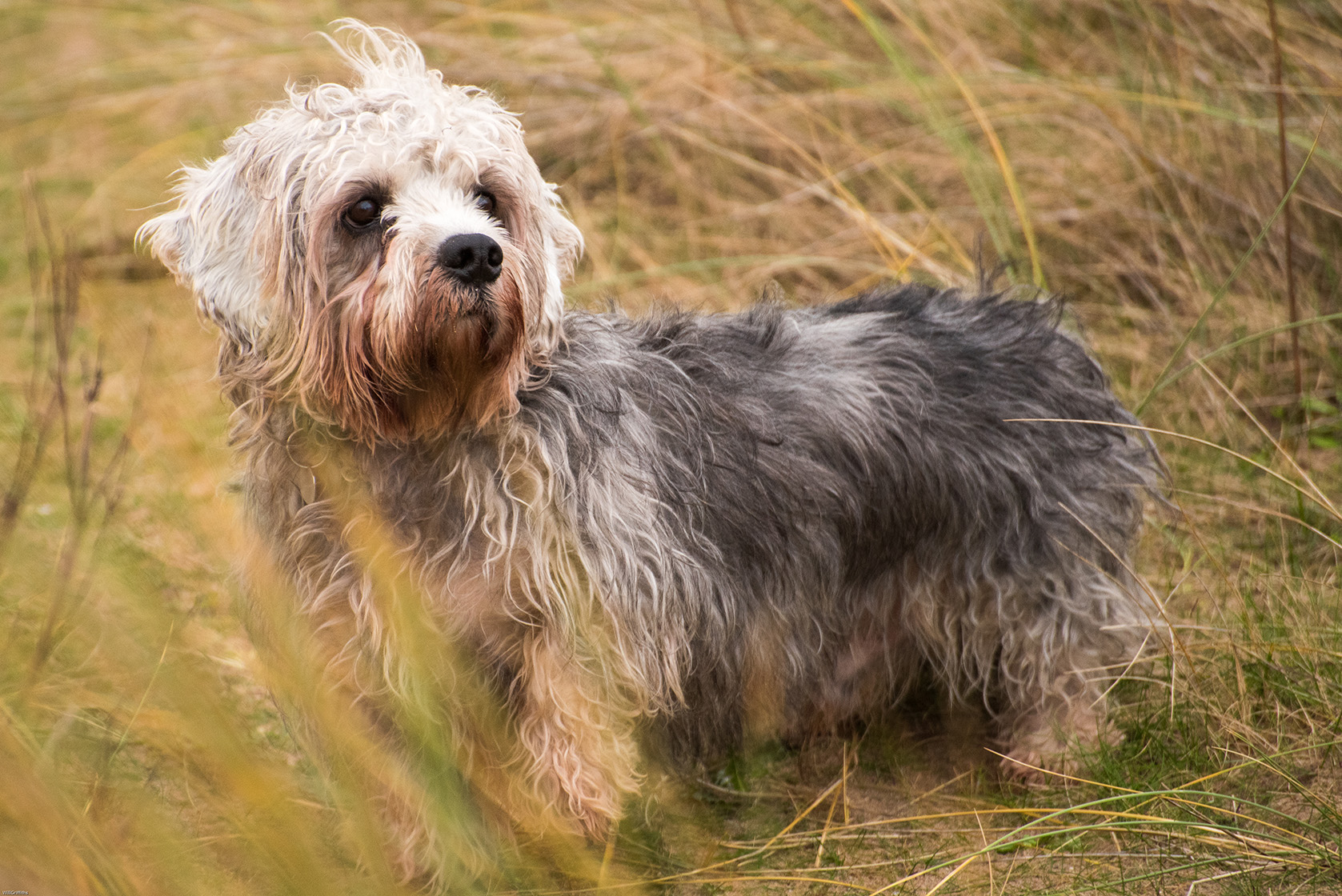
A Dandie Dinmont Terrier is long and low with short, powerful legs and a gently arched topline over the loins. The head is large in proportion to the body with a soft, silky covering (often described as a “topknot”) and large, expressive eyes.
The coat is a key feature: a double coat with a softer undercoat and a harder topcoat that feels crisp to the hand, with feathering on the legs. Traditional colors are “pepper” (bluish black through silvery gray shades) and “mustard” (reddish brown through pale fawn), each with a lighter topknot.
Colors
• Mustard
• Pepper
Health
Like all breeds, Dandies benefit from a relationship with a veterinarian who understands their build and lifestyle. A good routine includes preventive care, weight management, and prompt attention to any changes in mobility, eyes, or skin/coat comfort.
When choosing a puppy or adult dog, ask breeders or rescues for health history and what screening they do. Selecting for sound structure and avoiding exaggeration matters in a long, low breed—good movement and overall fitness should be prioritized alongside appearance.
Care
Coat care is a real part of Dandie ownership. Plan on regular brushing and combing to prevent matting, plus routine trimming/tidying to keep the silhouette neat and the furnishings manageable.
Daily care is otherwise straightforward: keep nails short, check ears, and maintain good dental hygiene. Because Dandies are long-backed and low to the ground, it helps to keep them lean and fit, use ramps/steps where practical, and avoid repetitive high-impact jumping.
Training
Training works best when it’s cooperative and purposeful. Use short sessions, high-value rewards, and clear criteria—Dandies can be bright problem-solvers, but they’ll tune out repetition.
Focus early on a reliable recall, loose-leash walking, and polite greetings. Terriers may have a strong interest in small animals and moving objects, so management (leashes, secure yards) plus impulse-control games can make everyday life much easier.
Temperament
Dandies are typically confident and dignified—terriers with backbone, but often more measured than the “always-on” types. They can be affectionate with their people and enjoy being close by without needing constant attention.
They’re also independent and persistent, which can read as stubbornness if training isn’t clear and consistent. Many do best with early socialization, calm boundaries, and outlets for their natural curiosity (sniffing, searching games, and short problem‑solving sessions).
Lifestyle
Dandies can adapt to apartment or house living as long as they get daily exercise and mental enrichment. They often enjoy a couple of brisk walks, exploratory sniff time, and a few short play or training sessions.
They usually prefer being included in family routines and may not love being left alone for long stretches without preparation. With proper introduction they can live with respectful children and other pets, but supervision and slow, positive introductions are important—especially around small animals.
Ownership
A great Dandie home is one that likes a “small dog with a big-dog attitude” and is willing to invest in grooming, training, and enrichment. Expect a dog that can be affectionate and funny, but also opinionated and self-directed.
Prospective owners should look for reputable breeders or breed rescues, meet adult dogs when possible, and ask detailed questions about temperament and health practices. Because the breed is relatively uncommon, patience in finding the right source is part of responsible ownership.
Interesting Facts
- Originated in the Anglo‑Scottish border region and gained its name from Sir Walter Scott’s novel *Guy Mannering*.
- Recognized coat colors are traditionally described as “pepper” and “mustard,” typically with a lighter topknot.
- The breed’s hallmark outline is long and low with a flexible body and strong forequarters.
- The coat is a double coat with a crisp outer texture and softer undercoat, with feathering on the legs.
- Often described as dignified and affectionate with family, with classic terrier determination.