
Boykin Spaniels
The Boykin Spaniel is a medium-size flushing and retrieving gundog that was developed in South Carolina for work in both the field and the water. Bred to be compact enough for boat travel yet tough enough for long hunting days, Boykins are known for being energetic outdoors and affectionate at home.
Today they’re often described as versatile “do‑it‑all” sporting dogs—happy to run, swim, and retrieve, but also content to be a close companion when their exercise and training needs are met. In many homes they do best as an involved family dog rather than a kennel dog.
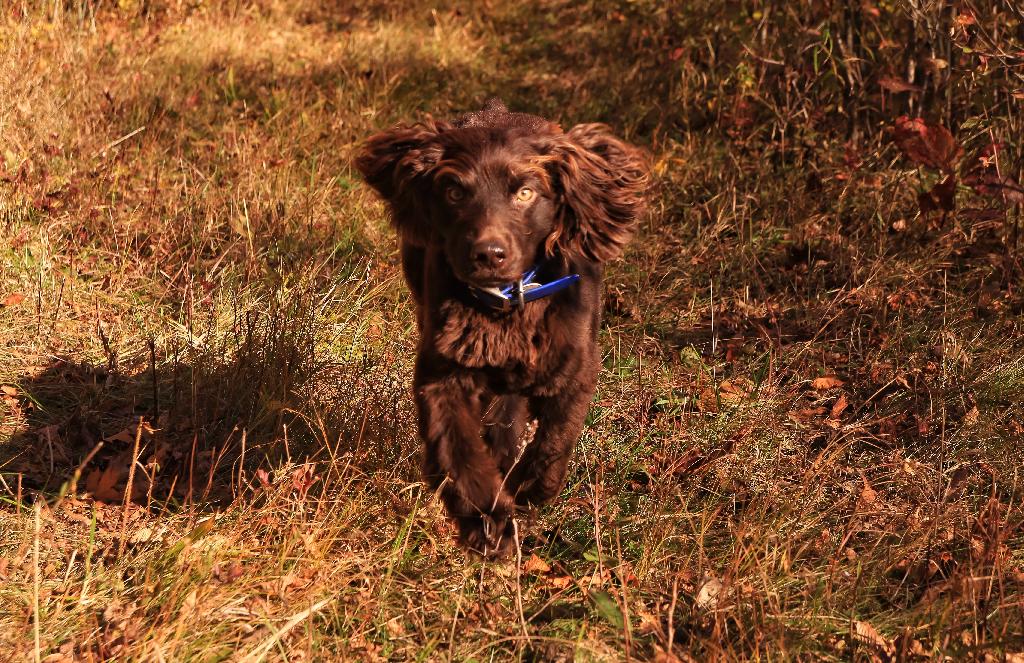
Description
The Boykin Spaniel is a medium-sized, versatile sporting dog known for its friendly temperament, intelligence, and exceptional hunting skills. Originally developed in South Carolina, the Boykin Spaniel was bred for hunting waterfowl and wild turkeys, making it an excellent companion for hunters and outdoor enthusiasts. It is the state dog of South Carolina, reflecting its cultural and historical significance.
Physically, Boykin Spaniels are sturdy and compact, with a medium-length, wavy or curly coat that is typically a rich liver or chocolate color. Their expressive eyes and floppy ears give them a gentle, approachable appearance. They are well-suited for retrieving tasks, with webbed feet that aid in swimming and a strong, athletic build.
Boykin Spaniels are affectionate, friendly, and eager to please, making them excellent family pets. They are good with children and other animals when properly socialized. The breed is highly energetic and thrives in active households, as they require regular exercise and mental stimulation to stay happy and healthy.
Training a Boykin Spaniel is usually straightforward due to their intelligence and willingness to learn. They respond well to positive reinforcement and excel in obedience, agility, and field training. Their adaptable nature makes them equally comfortable as a hunting companion or a devoted family member.
The breed's medium-sized frame and moderate grooming needs make it relatively easy to care for. Regular brushing helps keep their coat in good condition, and their active lifestyle often requires occasional baths after outdoor adventures.
Overall, the Boykin Spaniel is a loyal, energetic, and intelligent breed that excels in both work and companionship. It is ideal for active families or individuals who enjoy outdoor activities and can provide the attention, training, and exercise this spirited breed requires.
History
The Boykin Spaniel is a relatively young American breed that emerged in the early 20th century in the South Carolina lowcountry. Known for their distinctive chocolate-brown coat and friendly nature, Boykins were specifically developed to excel at hunting waterfowl and wild turkeys in swampy, densely vegetated environments. The breed’s story begins with a stray dog found by a man named Alexander White near a church in Spartanburg, South Carolina. Impressed by the little brown dog’s intelligence and aptitude for hunting, White gave him to his hunting partner, Lemuel Whitaker Boykin. Mr. Boykin recognized the dog’s potential and started refining the line by crossing the stray with other known sporting breeds, likely including the Chesapeake Bay Retriever, American Water Spaniel, and Cocker Spaniel.
Over subsequent generations, Boykin and other local hunters honed these dogs into superb gun dogs with a strong work ethic, a keen nose, and remarkable stamina in marshy terrain. Their smaller size and innate swimming ability made them ideal for retrieving ducks, geese, and other fowl, as they could fit neatly into boats and navigate tight spaces among reeds and undergrowth. Boykins also earned a reputation as affectionate family companions, equally content in the field or at home. By the latter half of the 20th century, the breed’s popularity had spread beyond South Carolina, prompting the formation of breed clubs and growing interest nationwide. In 1985, the Boykin Spaniel was declared the official state dog of South Carolina, solidifying its cultural significance. Finally, in 2009, the American Kennel Club (AKC) granted the Boykin Spaniel full recognition, marking the breed’s transition from a local hunting companion to a beloved fixture among sporting dog enthusiasts across the country.
Boykin Spaniels Hunting Ability and Traditional Roles
Appearance
Boykins are sturdy, athletic spaniels with a slightly longer-than-tall outline and a distinctly “sporting” look. Their build is meant for endurance and agility, not heaviness, and working dogs often show the minor scuffs that come with time in brush and water.
The coat is typically flat to moderately curly and medium in length, with light feathering on the legs. Color is a solid rich liver/dark chocolate, with a small white chest spot sometimes seen. Eyes are usually yellow to brown and give an alert, intelligent expression.
Size is moderate: males are commonly about 15½–18 inches and 30–40 pounds; females about 14–16½ inches and 25–35 pounds.
Colors
• Brown
• Chocolate
• Liver
Health
Boykin Spaniels are generally robust, but like many purebred sporting dogs they have some heritable risks. Commonly discussed concerns include hip dysplasia, eye disease (including juvenile cataracts), heart issues such as pulmonic stenosis, and orthopedic issues like luxating patella.
The breed is also associated with certain inherited conditions such as exercise-induced collapse (EIC) and degenerative myelopathy (DM). Responsible breeders typically screen breeding dogs (for example via OFA-style orthopedic/heart/eye evaluations and appropriate DNA testing) and are transparent about results.
Day-to-day, the biggest “health multiplier” is smart management: keep the dog lean, condition gradually for hard work, and watch for overheating or collapse during intense exercise—especially in hot, humid weather or during high excitement.
Care
Coat care is straightforward but not “no maintenance.” A weekly brush-out helps control shedding and prevents tangles, and many owners keep the coat a bit shorter in warm months for comfort and quicker drying after water work.
Because Boykins often swim and have drop ears, ear hygiene is important. Dry ears after swimming and check for redness, odor, or excess debris; routine cleaning as advised by your veterinarian can help reduce ear infections.
Plan for daily exercise and recovery time. These dogs can go hard, so appropriate conditioning, nail care, and rest days help keep them sound—especially if they hunt frequently or train for strenuous sports.
Training
Boykins tend to learn quickly and respond best to upbeat, reward-based training. Short, engaging sessions work well, and many owners find that games (retrieving, scent work, “find it”) keep motivation high while building real-world skills.
Start with foundation behaviors—recall, loose-leash walking, calm settling, and impulse control—before adding higher excitement work like birds or heavy retrieving. Consistency is key: a smart sporting dog will also learn what you allow.
If you plan to hunt, introduce birds, water, and gunfire thoughtfully and at the dog’s pace. Many Boykins have strong natural instincts, but careful early training helps prevent problems like breaking, hard mouth, or over-arousal in the field.
Temperament
The Boykin Spaniel is generally friendly, people-oriented, and eager to please. Many have a merry, enthusiastic attitude and bond strongly with their family, often wanting to be wherever the action is.
As a hunting-bred dog, the Boykin usually brings plenty of drive—especially for birds, scents, and retrieving. With adequate daily activity and mental work, that intensity turns into a fun, biddable partner; without it, it can show up as restlessness or “busy” behavior.
Early socialization matters. Confident, well-raised Boykins are typically good with children and other dogs, but they do best when their energy is channeled into training, play, and purposeful work.
Lifestyle
This is an active, outdoorsy breed. A Boykin that gets meaningful daily outlets—brisk walks, fetch/retrieving, swimming, training drills, or time in a safe field—tends to be much easier to live with indoors.
They can adapt to many homes, but they’re not ideal for owners who want a low-energy dog. Expect to provide both physical exercise and mental stimulation; bored Boykins may resort to chewing, digging, or nuisance barking.
Because they’re typically social and handler-focused, most do best when they’re included in family life. Long stretches of isolation can lead to frustration or separation-related behaviors in some individuals.
Ownership
A Boykin Spaniel can be a great fit if you want a trainable companion that will truly participate in your life—weekend adventures, regular training, and plenty of interaction. Before committing, be honest about whether you can provide consistent exercise and structure year-round.
When choosing a puppy, take your time and prioritize health and temperament. Ask breeders what health testing they do (hips, eyes, heart, and relevant DNA tests), what the parents are like to live with, and how puppies are raised and socialized. A good breeder will welcome questions and help match a puppy’s energy level to your household.
If you’re open to an adult dog, breed-specific rescue can also be a good route. Either way, plan for ongoing costs—quality food, veterinary care, training, and gear for an active dog (crates, life vest for boating, and durable chew toys).
Interesting Facts
• Developed in South Carolina in the early 1900s as a compact, versatile hunting retriever/flusher.
• Solid liver/dark chocolate coat; some dogs have a small white chest spot.
• Strong swimmers and natural retrievers; many love water work.
• Typical size: males ~15½–18 in., 30–40 lb; females ~14–16½ in., 25–35 lb.
• Often thrives as a “family + field” dog—needs daily exercise and attention.
• Health-conscious breeding commonly includes orthopedic/eye/heart screening and DNA testing for key inherited conditions.