Braque Francais
The Braque Français is a traditional French pointing dog from the southwest of France. In modern kennel-club terms there are two closely related varieties: the larger Gascogne type and the smaller Pyrenean type. Both were developed as practical, all-day hunting partners—bred to find game with a steady point and to work closely with a walking hunter.
Today you’ll mostly see the breed in working or dual‑purpose homes. Expect a dog that thrives on purposeful activity (field work, scent games, long hikes) and that bonds strongly with its people when given regular exercise, training, and a job to do.
Description
The Braque Français is a versatile and athletic pointing dog from France, valued for its hunting skills, intelligence, and friendly nature. There are two varieties of this breed: the larger Gascogne type and the smaller Pyrenean type, both sharing similar characteristics but differing in size and specific traits.
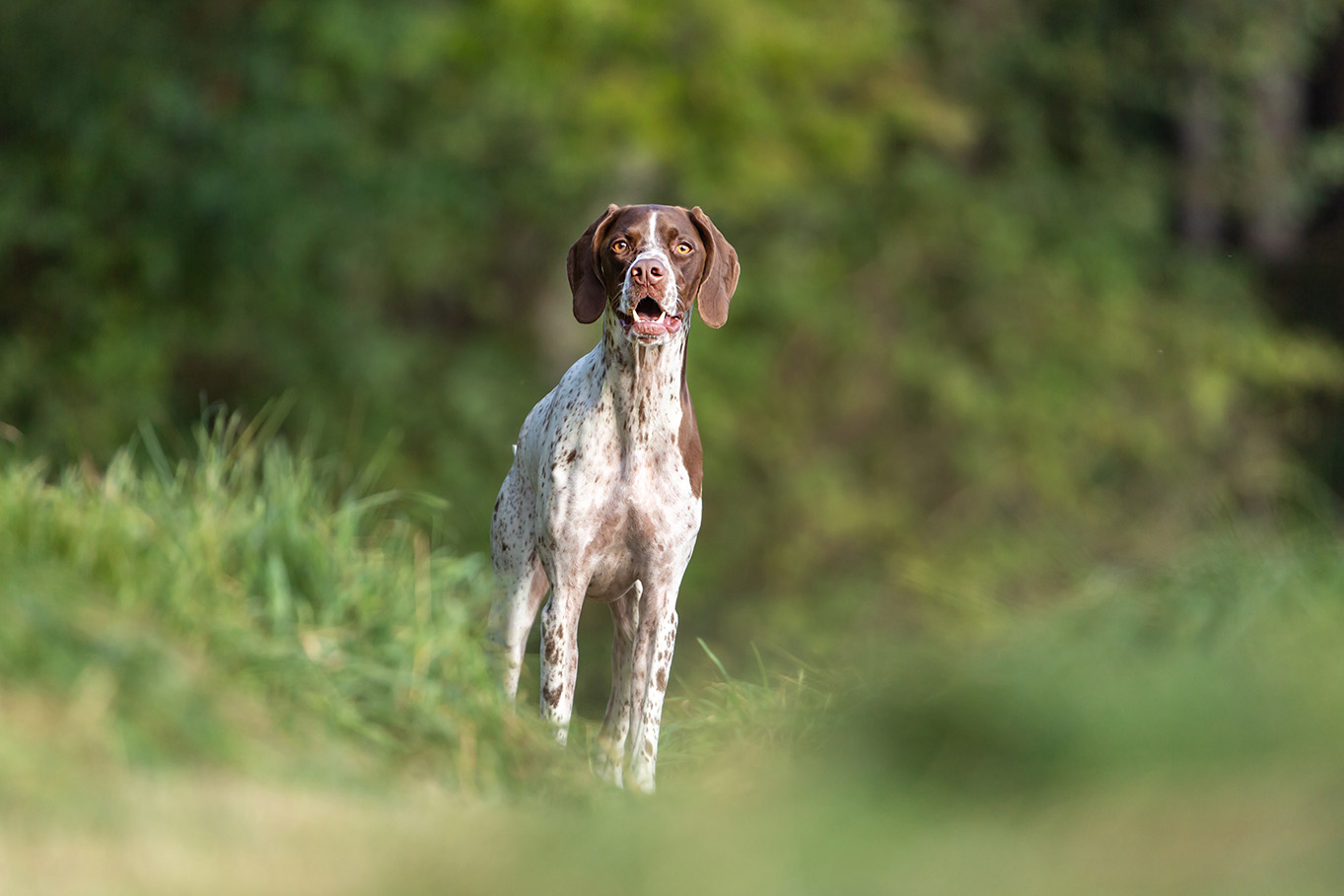
Physically, the Braque Français is well-proportioned, with a muscular yet elegant build. It has a short, smooth coat that is usually white with brown or chestnut ticking or patches. Its expressive eyes and gentle demeanor reflect its amiable personality.
The breed is known for its calm and affectionate temperament, making it an excellent family companion. It is typically good with children and other animals, especially when socialized early. In the field, the Braque Français is a skilled and tireless hunter, excelling in pointing and retrieving, with a strong nose and adaptable nature that suit various terrains and climates.
Training the Braque Français is usually straightforward, as the breed is intelligent, eager to please, and responsive to positive reinforcement. It requires regular physical activity and mental stimulation to stay healthy and happy, thriving in active households or with owners who enjoy outdoor activities such as hunting, hiking, or running.
Overall, the Braque Français is a versatile, affectionate, and loyal breed that excels in both work and companionship. It is an excellent choice for active families or individuals seeking a devoted partner for both outdoor adventures and home life.
History
The Braque Francais is one of the oldest continental pointing breeds, with origins that stretch back centuries in the rural regions of southwestern France. Its name, “Braque,” comes from an old French term for pointing dogs, while “Francais” signifies its Gallic heritage. Historically, these versatile gun dogs were kept by local hunters who needed a companion capable of working in a range of terrains—from lowland fields to the rugged foothills of the Pyrenees. Over time, different localized strains emerged, giving rise to two distinct varieties that exist today: the Braque Francais, Gascogne type (the larger, heavier variety) and the Braque Francais, Pyrenees type (a slightly smaller, more agile dog).
Documentation of these pointing dogs dates to at least the 15th or 16th century, though it’s likely they existed in some form long before. In the Gascony region and the Pyrenees, hunters honed the breed’s core qualities: a sharp nose, steady pointing instinct, and calm demeanor that made it easy to train and live with. As France’s agricultural communities modernized, the Braque Francais numbers dipped, like many other gundog breeds. However, its loyal following ensured that breed clubs formed in the late 19th and early 20th centuries to standardize the two varieties, codifying the differences in size, coat, and hunting style.
In the aftermath of the World Wars, the Braque Francais—much like other European hunting dogs—faced population challenges. Nonetheless, a handful of dedicated breeders preserved and revived the bloodlines. Formal recognition came through the Société Centrale Canine (French Kennel Club) and later the Fédération Cynologique Internationale (FCI), helping the breed regain a foothold in France and gradually earn admirers overseas. Today, both varieties of the Braque Francais remain popular among hunters who appreciate their adaptability, intelligence, and gentle nature. While still relatively rare outside Europe, these dogs represent a living piece of French hunting heritage, continuing to excel in the field and as affectionate family companions.
Braque Francais Hunting Ability and Traditional Roles
Appearance
Braques Français are medium-built, “braque” (continental pointer) type dogs with a noble, athletic look—powerful without being heavy. The Gascogne type is the taller, more substantial dog with slightly looser skin; the Pyrenean type keeps the same overall outline but in a lighter, more compact package.
Both varieties have drop ears, a rectangular muzzle, and an expressive, open eye. Coats are short and functional; the Gascogne’s coat tends to be a bit thicker and more furnished, while the Pyrenean’s is finer and shorter. Typical coloring is chestnut brown, either solid or combined with white, often with ticking/roaning and sometimes tan markings.
Colors
• Brown & White
• Chestnut Brown
• Chestnut Roan
• White
Health
Breed standards emphasize soundness and functional build, and many Braques Français are generally robust when responsibly bred. Still, active medium-to-large dogs can be prone to orthopedic issues (including hip dysplasia) and to soft-tissue strains if they’re overworked before they’re conditioned.
Common practical concerns for field dogs include ear inflammation/infections, minor injuries from rough cover, and parasite or tick-borne disease exposure. As with other deep-chested sporting breeds, talk with your veterinarian about bloat (GDV) risk management—meal routines, conditioning, and whether preventive gastropexy is appropriate for your dog’s size and lifestyle.
Care
Coat care is straightforward: a quick brush or rubber curry to remove loose hair, plus occasional baths as needed. Pay special attention to ears—drop ears that spend time in brush or water can trap moisture and debris, so regular checks and gentle cleaning help prevent irritation.
Because this is an athletic hunting breed, daily conditioning is part of “care.” Plan for sustained exercise (not just a quick potty walk), along with scent-based enrichment. Keep nails trimmed for traction and joint comfort, and check paws after field work for burrs, cuts, or foxtails.
Training
These dogs are typically biddable and do best with clear, upbeat training. Use reward-based methods and lots of short repetitions; many Braques Français shut down with harsh corrections. Foundational skills—recall, heel/loose-leash walking, place/settle, and polite greetings—make life easier for a dog that’s excited by movement and scent.
If you plan to hunt, introduce birds and gunfire gradually and professionally if you’re new to gun-dog work. Teach an “off switch” from puppyhood (crate comfort, calm handling, impulse control games) so the dog can relax at home after high-drive field sessions.
Temperament
Bred to hunt cooperatively, the Braque Français is usually people-oriented and responsive, with a “working partner” mindset rather than an independent one. Many are affectionate at home and serious in the field—switching readily from calm house manners to high focus when it’s time to work.
Like most pointing breeds, they carry a strong prey drive and a sensitive nose. Early socialization and consistent boundaries matter, especially around birds and small animals. With enough daily outlet, they’re typically steady, friendly dogs; without it, they can become restless or vocal from boredom.
Lifestyle
A Braque Français fits best with an active household that enjoys training and outdoor time. Regular off‑leash running in safe areas, long sniffy walks, or structured canine sports (nose work, field training, tracking) help meet their needs. A small yard alone usually isn’t enough.
They can do well in a home setting—many are pleasant indoor companions—so long as the daily exercise plan is real and consistent. Expect seasonal “busy” periods if you hunt, and plan for mental downtime work (settle training, chew time, puzzle feeders) during off days.
Ownership
Look for breeders who health test, prioritize stable temperament, and can explain whether their dogs are primarily from hunting lines, show lines, or dual‑purpose stock. Ask to see health documentation, discuss how puppies are socialized, and get an honest match for your activity level—this breed is happiest when its instincts are channeled.
Before committing, consider availability in your region; Braques Français can be uncommon outside France and parts of Europe/North America. If importing or traveling for a puppy, confirm registry recognition where you live, and ensure you’re prepared for ongoing training, exercise, and field-safety routines (recall, e-collar education if used, and strong tick/parasite prevention).
Interesting Facts
• Two closely related varieties: Gascogne type (larger) and Pyrenean type (smaller, lighter).
• Classified as a pointing dog; bred to work cooperatively with hunters.
• Typical color is chestnut brown, either solid or mixed with white, often with ticking/roaning.
• The Pyrenean type generally has a finer, shorter coat and tighter skin than the Gascogne type.
• Best suited to active homes that can provide daily exercise plus nose‑work style enrichment.