
Hortaya Borzaya
Basics
The Hortaya Borzaya (also seen as Chortaya/Hortaya) is a short‑coated, Eastern European sighthound developed for open-country hunting. It was traditionally used to spot game at distance and pursue it at high speed, often working from horseback or alongside other hunting animals.
In its home regions (Ukraine and Russia), the breed has long been valued as a practical, durable hunter rather than a purely show dog. Outside Eastern Europe it remains uncommon, so finding experienced breeders, mentors, and breed‑savvy veterinarians can take extra effort.
Description
The Hortaya Borzaya is an ancient Russian breed of sighthound, known for its speed, endurance, and hunting prowess. Historically, it was used for hunting large game, such as wolves, hares, and deer, across the vast and often rugged terrain of Russia. The breed's origins can be traced back over a thousand years, and it is thought to have developed from a mixture of various sighthound breeds, including the Tatar and Persian Greyhounds, with the aim of creating a dog that was capable of hunting in the challenging conditions of the Russian landscape. Despite its long history, the Hortaya Borzaya has only gained broader recognition outside Russia in recent years.
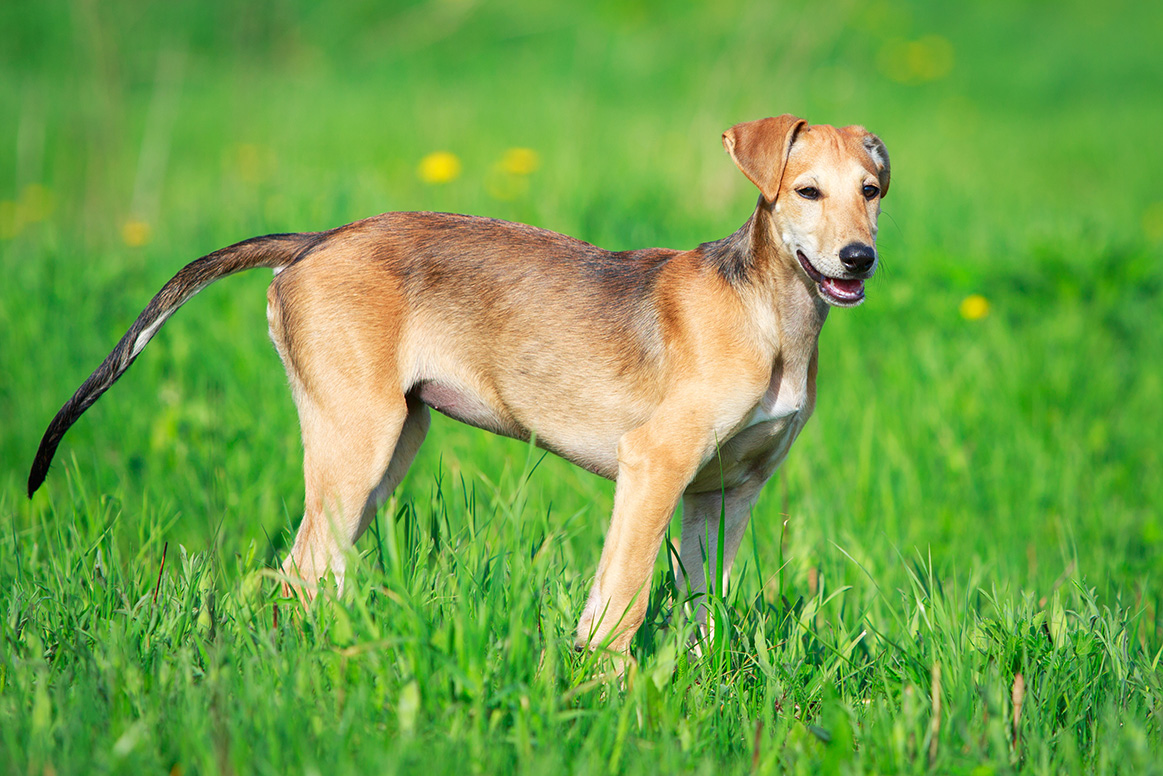
Physically, the Hortaya Borzaya is a medium-sized, lean, and athletic dog, built for speed and stamina. They have a long, narrow head with a well-defined muzzle, and their eyes are almond-shaped, often dark, giving them an alert and intelligent expression. Their bodies are muscular yet slender, with strong, flexible limbs that enable them to reach impressive speeds in pursuit of prey. The breed’s coat is typically short to medium in length and can come in a variety of colors, including solid, patched, or brindled patterns. The coat is smooth and close-fitting, providing the dog with a streamlined appearance that enhances its hunting efficiency. The Hortaya Borzaya’s tail is long, carried low, and slightly curved, adding to the breed’s graceful, elegant silhouette.
Known for their exceptional speed and keen eyesight, Hortaya Borzayas excel in hunting. Their sighthound heritage gives them an innate ability to spot prey from a distance, and they have been trained to chase and catch quarry across open fields. Unlike some other sighthound breeds that may be primarily used for racing, the Hortaya Borzaya was traditionally a hunting companion, working closely with humans to track and capture prey. Their intelligence and independence are essential traits for this role, allowing them to make quick decisions during a hunt, while their loyalty to their handlers is also a key part of their temperament.
In terms of temperament, the Hortaya Borzaya is an intelligent and independent dog, but they are also known for their calm and reserved nature when at home. While they can be aloof or distant with strangers, they are deeply loyal to their families and make affectionate companions. They tend to have a quiet, dignified demeanor and are not overly excitable, though they do require regular exercise to keep their hunting instincts sharp and their energy levels balanced. Despite their independent nature, they are often responsive to training, especially when their intelligence and natural instincts are harnessed in an appropriate way.
Overall, the Hortaya Borzaya is a breed that combines elegance, strength, and incredible speed. Their rich history as hunters, paired with their impressive physical abilities, make them a fascinating breed, particularly for those with an interest in sighthounds and working dogs. While not as well-known outside of Russia, the Hortaya Borzaya’s unique traits and qualities make it a breed worth recognizing, especially for those who appreciate dogs with a strong instinctual drive and deep loyalty.
History
The Hortaya Borzaya, often referred to simply as the Hortaya, is an ancient sighthound breed originating from the expansive steppes of Eastern Europe and Central Asia. Its name derives from the Russian word hort, meaning "steppe," reflecting its natural habitat and purpose as a hunter of swift prey across vast, open landscapes. The breed has existed for centuries, serving nomadic tribes and rural communities as a versatile hunting dog capable of pursuing hares, foxes, and even larger game like antelope. Its speed, endurance, and sharp eyesight made it an indispensable companion for survival in the harsh environments of the steppes.
The Hortaya Borzaya’s ancestry likely includes a mix of indigenous sighthounds that were shaped by natural selection and human needs. These dogs adapted to the steppe’s extremes of temperature, from freezing winters to scorching summers, developing a lean and athletic build, a short coat, and remarkable stamina. Unlike many other breeds, the Hortaya was not bred to meet strict aesthetic standards but to fulfill practical roles, resulting in a hardy and functional dog.
During the Soviet era, the Hortaya Borzaya’s existence was threatened as industrialization and changes in hunting practices diminished the need for traditional hunting dogs. However, rural communities in Russia, Ukraine, and Kazakhstan continued to preserve the breed, valuing its working abilities and deep connection to regional traditions. Efforts by dedicated enthusiasts have helped ensure the breed’s survival into the modern era.
Today, the Hortaya Borzaya remains relatively rare outside its native regions but is cherished by those who appreciate its history, elegance, and skill. It continues to be used for hunting in some areas, while also gaining recognition as a loyal and gentle companion. The breed’s resilience and adaptability are a testament to its centuries-old partnership with humans, thriving as a true product of the steppe environment.
Traditional Hortaya Borzaya Roles
Appearance
Hortaya Borzaya are tall, athletic dogs built for speed and efficient ground-covering movement. The outline is clean and “dry” (little excess skin), with long legs, a deep chest, a tucked-up underline, and a long, wedge-shaped head typical of sighthounds.
The coat is short and elastic on the body with slightly longer hair on the back of the thighs; seasonal undercoat can appear in winter and be minimal in summer. Colors are wide-ranging (including solid and patterned coats), with dark pigment preferred on the nose and eye rims; the tail is long and carried low at rest, rising in motion without being held straight upright.
Colors
• Any
• Black
• Blue
• Brindle
• Chocolate
• Cream
• Piebald
• Red
• Sable
• White
Health
As a rare regional breed, there isn’t one universally published health profile in the way there is for many kennel-club breeds. In practice, owners often focus on the standard sighthound considerations: maintaining a lean body condition, protecting joints and soft tissue during high-speed exercise, and watching for injuries such as sprains, toe problems, and muscle strains.
Discuss anesthesia and pain-control protocols with your veterinarian—many lean, athletic dogs can respond differently than heavier breeds. Also learn the early warning signs of acute emergencies (such as bloat-like symptoms) and have a plan for after-hours care, since delays matter with fast-moving conditions.
Care
Daily care centers on exercise management, feet and nail maintenance, and sensible nutrition for a lean, working build. The short coat is generally easy—weekly brushing and occasional bathing is usually enough—but check the skin and coat after runs for burrs, cuts, or insect bites.
Because these dogs accelerate and turn hard, keep nails trimmed and pads conditioned; small abrasions can become bigger issues if ignored. Provide a warm, soft resting spot (bony sighthound frames can develop pressure points) and use appropriate weather gear in cold or wet conditions, especially for dogs with a thinner winter coat.
Training
Training is most successful when it’s reward-based and focused on cooperation, not repetition. Short sessions with clear criteria help a Hortaya stay engaged; drilling cues can create boredom or avoidance.
Recall is the make-or-break skill, but it should be approached realistically: a true sighthound may ignore a cue when prey appears. Build a layered safety plan—strong relationship recall, emergency cues, long-line practice, and management tools (secure fencing and leashes) so the dog doesn’t have to “choose” between safety and instinct.
Temperament
In the house, many Hortaya are calm and observant—saving their intensity for when something triggers their chase instinct. Like most sighthounds, they can be sensitive to harsh handling and do best with steady, predictable routines.
Outdoors, their vision-led prey drive is a defining trait. They may be reserved with strangers and selective about canine friends, especially if they haven’t been well socialized. With their people, they’re typically loyal and bonded, but not “needy,” often showing affection in a quiet, composed way.
Lifestyle
This is not a “walk around the block” breed. Hortaya generally thrive with space, structured opportunities to run, and mentally satisfying outlets that respect their chase drive (such as safely managed lure-style games, sprint sessions in a secure area, or long, steady hikes).
Indoors, they’re often quiet companions who enjoy settling near their people. The lifestyle challenge is that their most natural activity—chasing—must be offered in safe, controlled ways to avoid wildlife incidents, traffic risks, and conflict with local leash laws.
Ownership
Hortaya ownership is best for experienced sighthound people (or motivated first-timers willing to learn fast) who can provide secure containment and thoughtful management. A solid fence, careful door/garage routines, and consistent leash skills are baseline requirements, not “nice to haves.”
Because the breed is uncommon, ownership often includes extra legwork: networking for reputable breeders, importing or traveling, and finding a community that understands the breed’s working heritage. If you want an eager-to-please, off-leash social butterfly, a Hortaya can be a frustrating fit; if you want a steady home companion with serious field ability, they can be deeply rewarding.
Interesting Facts
- Sighthound type developed for open-country pursuit hunting in Eastern Europe.
- Short, low-maintenance coat with seasonal changes; winter undercoat may appear.
- Tall, leggy, and built for speed—secure fencing and leash management are essential.
- Often calm indoors, but can switch instantly into high-drive chase mode outside.
- Rare outside its home region, so community and breeder access may require extra effort.