
Tibetan Mastiff
Basics
The Tibetan Mastiff is an ancient livestock-and-property guardian from the Himalayas, developed to make independent decisions and take protection seriously. Unlike many breeds that were shaped to work under close direction, this is a dog bred to assess threats, hold territory, and stand watch.
In the home, many Tibetan Mastiffs are calm and steady with their family, but they’re not typically “everybody’s friend.” They fit best with owners who want a true guardian type and who understand that early socialization, structure, and management are part of responsible ownership.
Description
The Tibetan Mastiff is a majestic and ancient breed known for its imposing size, loyalty, and protective instincts. Originating in the Himalayan regions of Tibet, this breed was traditionally used as a guardian for livestock, monasteries, and homes. Its role as a protector is deeply ingrained in its temperament, making it a highly vigilant and independent dog. The Tibetan Mastiff is considered one of the foundational breeds from which many modern mastiffs and mountain dogs have descended.
Physically, the Tibetan Mastiff is a large, powerful dog with a thick double coat that helps it withstand harsh, cold climates. Males typically weigh between 85 and 160 pounds, while females are slightly smaller. They stand 24 to 30 inches tall at the shoulder. Their luxurious coat, which comes in a variety of colors including black, brown, blue-gray, and gold, often features a mane-like ruff around the neck, enhancing their regal appearance. Their expressive eyes, broad head, and sturdy build contribute to their commanding presence.
Temperamentally, Tibetan Mastiffs are intelligent, independent, and deeply devoted to their families. While they are affectionate with their owners, they can be aloof or wary around strangers, a trait that makes them excellent guardians. They are naturally protective and will respond assertively if they sense a threat, yet they are not typically aggressive without cause. These dogs thrive in environments where they can exercise both their minds and bodies but are equally content relaxing near their family, provided their needs are met.
Owning a Tibetan Mastiff requires a commitment to proper training, socialization, and management. Their independent nature can make them challenging for inexperienced dog owners, as they are not as eager to please as some other breeds. However, with consistent, positive reinforcement training, they can become well-mannered and reliable companions. Ideal for those with space to accommodate their size and energy levels, Tibetan Mastiffs are best suited to homes with large yards or rural settings. This breed combines ancient guardianship instincts with a loving heart, making them a unique and rewarding addition to the right household.
History
The Tibetan Mastiff is an ancient and majestic breed with origins that date back thousands of years to the rugged Himalayan regions of Tibet, Nepal, and Bhutan. Known as a guardian of livestock, monasteries, and villages, the breed was developed to protect against predators such as wolves, leopards, and even intruders. Its thick double coat, massive build, and imposing presence made it perfectly suited to the harsh climates and high altitudes of its homeland. The Tibetan Mastiff is deeply tied to Tibetan culture and history, often regarded as a symbol of strength and loyalty.
The breed’s origins are somewhat shrouded in mystery, but it is believed to be one of the foundational breeds from which other mastiff and large working breeds descended. Marco Polo, during his travels to Asia in the 13th century, described a dog of extraordinary size and ferocity, likely referring to the Tibetan Mastiff. For centuries, these dogs remained isolated in the Himalayan regions, serving their roles as protectors and living alongside nomadic herders and monks.
The Tibetan Mastiff was first introduced to the Western world in the 19th century when British travelers and colonial officials brought a few specimens to England. The breed piqued the interest of European dog enthusiasts for its unique appearance and ancient heritage. However, it remained relatively rare outside its native regions until the late 20th and early 21st centuries, when its popularity surged globally, particularly in China, where it became a status symbol.
Today, the Tibetan Mastiff is celebrated for its independent and protective nature. While it is still used as a guardian in some parts of the world, it is also cherished as a loyal companion by those who appreciate its majestic appearance and ancient lineage. The breed’s history reflects its enduring role as a protector and its deep connection to the cultures of the Himalayas.
Traditional Tibetan Mastiff Roles
Appearance
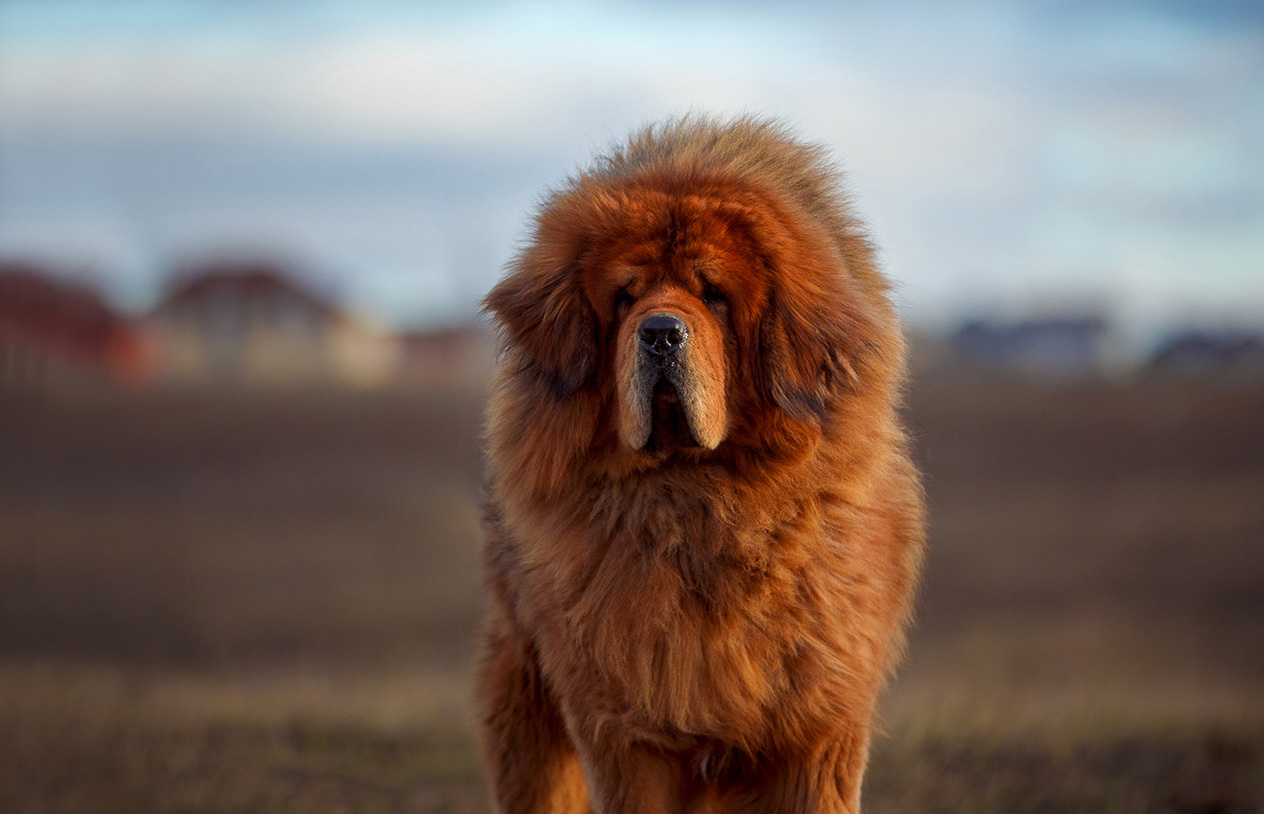
This breed is large, powerfully built, and heavily coated, with an impressive head and a distinctive mane-like ruff around the neck and shoulders—especially in mature males. The tail is carried high in a curl over the back when the dog is alert or moving, contributing to the breed’s unmistakable silhouette.
The coat is double, with a harsh outer layer and a dense undercoat that changes with climate and season. Colors can include black, brown, gray, gold, and sable (with or without markings), and the overall expression is meant to look noble and dignified rather than soft or “pet-like.”
Colors
• Black
• Black & Tan
• Blue Gray
• Blue Gray & Tan
• Brown
• Brown & Tan
• Cream
• Cream Sable
• Red Gold
• Red Gold Sable
Health
As a giant breed, the Tibetan Mastiff benefits from proactive health planning: keeping the dog lean, supporting joint health with appropriate exercise, and monitoring mobility over time. Discuss growth and nutrition with your veterinarian, especially during adolescence, because giant-breed development is slow and sensitive to overfeeding.
Work with breeders who screen for common large-breed concerns and who prioritize sound structure and temperament. Regular veterinary visits, sensible activity (avoiding repetitive high-impact stress when young), and prompt attention to eye or skin issues help maintain quality of life.
Care
Coat care is manageable with routine brushing, but expect heavy seasonal shedding (“coat blow”), especially when undercoat drops. Keeping up with brushing, nails, and dental care is important, and because of the breed’s size, handling skills (standing for grooming, calm restraint) should be taught from puppyhood.
Environment matters. Tibetan Mastiffs often do better in cooler weather and can struggle in heat, so plan exercise during cooler hours and provide shade and water. Secure fencing and thoughtful visitor management are key parts of everyday care for a territorial guardian.
Training
Training should start early and focus on calm behavior, clear boundaries, and controlled exposure to people, places, and routine handling. Positive reinforcement works well, but it usually needs to be paired with consistency—this breed notices loopholes and will test rules.
Rather than chasing “perfect obedience,” prioritize practical skills: leash manners for a large dog, a reliable recall foundation, a solid place/settle cue, and cooperative care (ears, paws, brushing). Ongoing socialization helps reduce over-guarding and makes real-life situations safer and easier.
Temperament
Tibetan Mastiffs are typically watchful, aloof, and territorial with strangers, while bonding closely with their own people. They’re often patient and tolerant in familiar settings, but they may be wary of new visitors and can take time to accept handling from non-family members.
Independence and strong will are normal traits, not training “failures.” A well-raised Tibetan Mastiff should be stable and confident, but it’s still a powerful guardian—owners need to take socialization seriously and prevent situations where the dog feels forced to make decisions on its own.
Lifestyle
This is not typically an “easy first dog.” Tibetan Mastiffs often prefer a predictable routine, a defined home territory, and owners who can manage guests and boundaries without drama. Many are more active at dawn/dusk and may be vocal guardians at night, which can be a real challenge in close neighborhoods.
A home with space and secure fencing is strongly preferred. While they do need exercise, they usually don’t want constant high-speed activity; they’re more about steady presence and purposeful movement than endless fetch.
Ownership
Ownership requires honest assessment of strength, time, and experience. You’re bringing home a large, independent guardian that may not welcome strangers and may not enjoy dog parks or chaotic social scenes. Good management—leashes, gates, fenced areas, and clear household rules—keeps everyone safe.
Seek reputable breeders or knowledgeable rescues that understand guardian breeds and match temperament carefully. Ask about the dog’s sociability, handling tolerance, and guarding tendencies, and be prepared for long-term commitment to training, socialization, and responsible containment.
Interesting Facts
- Ancient Himalayan guardian breed traditionally used to protect people, flocks, and monasteries.
- Strongly independent, with a natural tendency to be territorial and watchful.
- Distinctive mane/ruff around the head and neck, especially in males.
- Tail is typically carried curled over the back when alert or moving.
- Double coat with heavy seasonal shedding.
- Often calmer indoors than their size suggests, but needs secure management and early socialization.