
Deutscher Wachtelhund
Basics
The Deutscher Wachtelhund (often called the German Spaniel) is a medium-sized, versatile gundog developed in Germany to work in dense cover. In the UKC standard it’s described as a strong-boned, muscular dog with a coat built for protection and a nose used for finding and recovering game.
Unlike many spaniel types kept primarily for sport or show, the Wachtelhund has traditionally been closely tied to practical hunting use. UKC notes that in Germany the breed is generally owned by hunters/gamekeepers rather than the non-hunting public, reflecting its working focus.
In the field, the breed is valued for versatility—flushing and retrieving, and especially for determined tracking of wounded game. AKC highlights a blood-tracking ability comparable to a Bloodhound and notes that on a fresh trail the dog should vocalize so the hunter can keep track of its position.
Description
The Deutscher Wachtelhund, also known as the German Spaniel, is a versatile and enthusiastic hunting dog breed from Germany. Bred primarily for hunting, it is known for its strong scenting abilities, excellent tracking skills, and its enthusiasm for both upland game and waterfowl. The breed is highly valued by hunters for its versatility in the field.
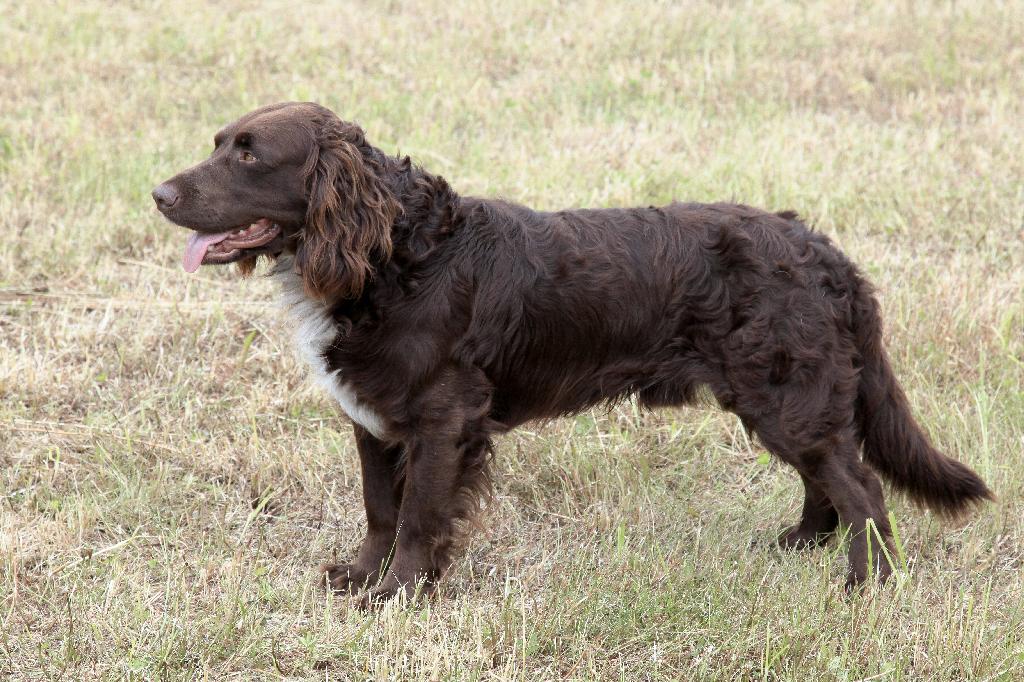
Physically, the Deutscher Wachtelhund is a medium-sized, well-built dog with a compact, muscular body. It has a dense, water-resistant coat that is usually brown or liver-colored, often with white markings. The coat is moderately long, with feathering on the legs, chest, and tail, giving it a rugged appearance. The breed has a distinct, expressive face, with dark eyes and a strong, alert expression.
Temperamentally, the Deutscher Wachtelhund is known for its high energy, intelligence, and strong work ethic. It is an enthusiastic and determined hunter, eager to please and highly trainable. This breed is also friendly, loyal, and affectionate with its family. While it is generally good-natured, the Deutscher Wachtelhund can be independent and requires a firm, consistent handler for training. Socialization is important to ensure it interacts well with other pets and strangers.
As a working dog, the Deutscher Wachtelhund thrives in active environments, particularly those that involve outdoor activities like hunting, tracking, and retrieving. It requires regular physical exercise and mental stimulation to remain happy and healthy. This breed is best suited for owners who are experienced with hunting dogs and who can provide the exercise and training it needs.
Overall, the Deutscher Wachtelhund is a versatile, energetic, and loyal breed, ideal for hunters and active families. With the right training, socialization, and care, it makes an excellent companion for those who enjoy outdoor activities and have the time and energy to meet its exercise and training needs.
History
The Deutscher Wachtelhund, or German Spaniel, is a versatile hunting dog with a rich history rooted in Germany. The breed was developed in the late 19th century to fulfill the needs of hunters seeking a reliable and adaptable dog capable of working in forests and fields. "Wachtelhund" translates to "quail dog," highlighting its primary use as a flushing and retrieving dog for upland game birds, although it has proven adept at hunting a wide variety of game, including deer and wild boar. The Wachtelhund is particularly valued for its ability to locate and flush game in dense underbrush, a skill that made it indispensable to German hunters.
The foundation of the Deutscher Wachtelhund can be traced to ancient spaniel-type dogs that were common in Europe during the Middle Ages. These dogs were gradually refined and standardized in the 19th century under the guidance of Friedrich Roberth, a German breeder who played a pivotal role in establishing the breed. Roberth focused on preserving the Wachtelhund's working abilities, emphasizing traits such as a keen nose, stamina, and an instinct for tracking and flushing game. The breed was officially recognized in Germany in 1903, and its development has since been closely monitored by the German Wachtelhund Club, which maintains strict standards to ensure its hunting capabilities are preserved.
The Wachtelhund’s popularity remained strong among hunters throughout the 20th century, particularly in Germany and neighboring countries. Unlike many other breeds that became popular as show dogs or pets, the Deutscher Wachtelhund has retained its primary role as a working dog. Breeding practices continue to emphasize functionality and temperament over appearance, ensuring the Wachtelhund remains true to its original purpose as a versatile and dependable hunting companion.
Today, the Deutscher Wachtelhund is still relatively rare outside of Germany but has a dedicated following among hunters in Europe and North America. It is known for its intelligence, trainability, and strong bond with its handler, making it an excellent partner for those who can meet its exercise and working needs. The breed’s history reflects its enduring connection to the hunting traditions of Germany and its status as a specialized yet highly valued member of the sporting dog world.
Traditional Deutscher Wachtelhund Roles
Appearance
The Deutscher Wachtelhund is a compact, solidly built, medium-sized gun dog. The UKC standard gives a height of roughly 18–21 inches for males and 17¾–20½ inches for females, with a desirable weight around 44–66 pounds; the overall impression is strength and endurance rather than fine-boned speed.
Head and expression are meant to read as soft and intelligent, with brown to hazel eyes and high-set, flat, close-lying ears covered in longer hair. The muzzle is strong and the nostrils are wide—features that match the breed’s emphasis on scenting and carrying game.
Coat is short on the head and longer on the body, typically thick, wavy (sometimes curly), and supported by undercoat for weather and brush. UKC lists solid brown and “brown schimmel” (brown roan/ticked patterns) as typical colors, with noticeable feathering on ears, legs, and tail.
Colors
• Brown
• Brown & White
• Red
Health
Overall, the Deutscher Wachtelhund is often described by breed people as a robust, purpose-bred working dog rather than a heavily “exaggerated” type. The DWNA notes no persistent significant health issues as a general breed-level concern, but that doesn’t replace individual screening and good preventive care.
As with many medium sporting dogs, owners should still be proactive: keep the dog lean, discuss joint health and appropriate exercise with your veterinarian, and consider screening appropriate to your region and the dog’s work level. Field use can also bring practical risks (cuts, strains, parasites), so routine tick prevention and post-hunt inspections matter.
Because the breed has drop ears and works in water and cover, ear health is a frequent day-to-day focus, and prompt attention to irritation helps prevent chronic problems. Choosing a breeder who can explain health history and working evaluations (not just looks) is one of the best “health decisions” you can make.
Care
Coat care is moderate but steady. The Wachtelhund’s thick, wavy coat and feathering benefit from regular brushing to prevent mats (especially behind the ears, in leg feathering, and around the collar area) and to remove burrs after hunts. A rinse and a thorough dry after wet outings helps keep skin and coat comfortable.
Ear care is an important routine: the breed’s long, close-lying, feathered ears can trap moisture and debris in the field. After running in brush or swimming, check and gently clean as needed, and watch for redness or odor that could signal irritation.
This breed also needs working-dog basics: nails kept short for traction, good dental hygiene, and plenty of safe exercise to keep muscles and weight in a healthy range. Because the Wachtelhund is often used in rough terrain, regular paw checks for cuts, thorns, and cracked pads are worth making a habit.
Training
Training tends to go best when it’s job-like: clear rules, lots of repetition in varied environments, and rewards that match the dog’s drive to hunt and use its nose. The UKC standard describes the Wachtelhund as easily trained and willing, and its traditional work (finding game, retrieving, blood trailing) pairs well with structured, progressive field training.
Because scent can “switch on” intense focus, recall and check-in behaviors should be built early and maintained for life. UKC notes that, unlike a hound, the Wachtelhund can be called off a trail and will return to its master—something owners should deliberately cultivate with consistent reinforcement.
If you plan to hunt, seek mentorship and testing opportunities that emphasize real-world performance. The DWNA describes a performance-based testing approach aligned with German systems, and that kind of evaluation can help guide training priorities and breeding-quality standards.
Temperament
The Wachtelhund is best understood as a serious working companion: friendly and affectionate at home, but driven and intense when scent is on the ground. The UKC standard describes a vibrant, willing worker with a friendly personality—qualities that support cooperation with a hunter while staying confident in cover.
A hallmark trait is persistence on track. AKC notes the breed’s strong scenting and blood-trailing ability and emphasizes that, on a fresh trail, the dog should vocalize to keep the hunter informed of its location—an instinct that can be extremely helpful in the field and noisy if unmanaged in suburban settings.
Because this is a purpose-bred hunting dog, mental steadiness matters as much as enthusiasm. UKC lists water and gun shyness as serious faults, underscoring the expectation of a bold, sound temperament around the tools and environments the breed was designed to work in.
Lifestyle
This is not a casual, low-energy pet breed: the Wachtelhund is happiest with a purpose and regular opportunities to use its nose. UKC describes it as a versatile hunting dog used on everything from waterfowl and upland game to fur and cloven-hoof game, which hints at the stamina and drive many individuals bring into daily life.
That said, the breed can settle well in the home when its work needs are met. UKC notes they “do best living in the home,” and owners often value an “off switch” when the day’s training or hunting is done—provided the dog gets enough exercise and engagement first.
Ideal setups include rural or semi-rural homes, active hunting households, and people who enjoy training. In more suburban settings, you’ll need a plan for heavy exercise, scent games, and secure containment; when left under-stimulated, a driven tracking dog can turn that energy into nuisance behaviors.
Ownership
Owning a Deutscher Wachtelhund usually means joining a small, work-focused community rather than shopping a common companion breed. AKC notes the breed is virtually unknown to the German non-hunting public and is typically owned by hunters, and UKC similarly emphasizes its historic restriction to hunting owners in Germany—so expect many breeders to prioritize hunting homes.
A good breeder or club contact should be able to explain the dog’s working evaluations, temperament, and suitability for the type of game and terrain you hunt. The DWNA describes registration and testing expectations tied to German systems, which is a reminder that “paperwork plus performance” is a core part of the breed culture.
If you want a family companion first and a hunter second (or not at all), be honest about that from the beginning. The right match is a dog whose drive level and vocal tracking tendencies fit your environment, training time, and tolerance for a serious, energetic sporting partner.
Interesting Facts
- Medium-sized, muscular gun dog with a thick, wavy coat built for rough cover (UKC).
- Common colors include solid brown and brown schimmel (roan/ticked patterns) (UKC).
- Noted for strong scenting and blood-trailing ability; on a fresh trail it should vocalize so the hunter can locate it (AKC).
- Traditionally a hunter’s dog in Germany rather than a general “pet market” breed (AKC/UKC).
- Often described as versatile: flushing, retrieving, and tracking/recovering game across varied terrain (UKC).