
Greater Swiss Mountain Dog
Basics
The Greater Swiss Mountain Dog (often called the Swissy) is a large, powerfully built working breed from Switzerland, historically used as an all-purpose farm dog. Their traditional jobs included driving cattle, guarding property, and pulling carts—work that shaped a confident, sturdy dog with a practical, no-nonsense personality.
In a modern home, Swissies are typically devoted family companions who like being included in daily routines. They tend to be steady rather than frenetic, but they’re still working dogs at heart and do best when they have structure, training, and regular physical outlets.
Description
The Greater Swiss Mountain Dog (often called the "Swissy") is a large and powerful breed known for its strength, agility, and affectionate nature. Originally from the Swiss Alps, this breed was developed as a working dog for tasks such as herding cattle, pulling carts, and guarding livestock. The Greater Swiss Mountain Dog is one of the oldest Swiss mountain dog breeds, and while it still retains its strong work ethic, it is now more commonly kept as a loyal companion and family dog.
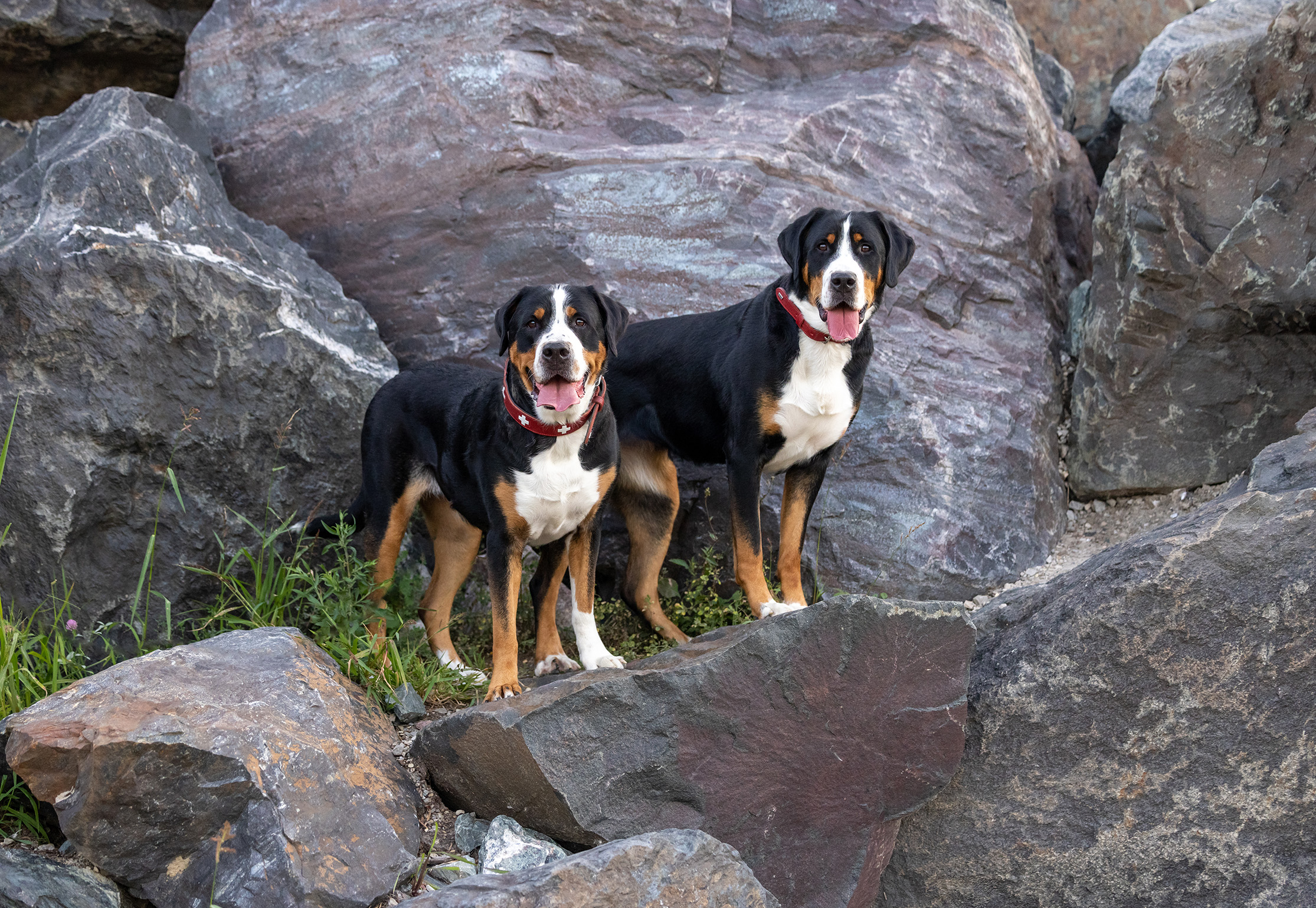
Physically, the Greater Swiss Mountain Dog is an imposing yet well-balanced breed, standing between 23 and 29 inches at the shoulder and weighing between 85 and 140 pounds. It has a large, muscular body with a broad chest, strong limbs, and a powerful build that reflects its heritage as a draft and working dog. The breed’s thick double coat, which is primarily black with tan and white markings, provides protection against the cold weather in its mountainous homeland. The coat is relatively low-maintenance, though regular brushing is necessary to keep it clean and healthy. The Greater Swiss Mountain Dog’s expression is confident and alert, with dark eyes and a square-shaped muzzle that adds to its dignified appearance.
Known for its gentle and affectionate temperament, the Greater Swiss Mountain Dog is often described as a "giant teddy bear." While the breed’s imposing size may initially be intimidating, it is typically very friendly, good-natured, and especially devoted to its family. The Greater Swiss Mountain Dog is known for being patient with children and often gets along well with other dogs and pets when properly socialized. It can be somewhat reserved with strangers but is not aggressive, instead being cautious and protective when needed. As a natural guardian, the breed is watchful and alert, but it is more likely to show loyalty and protectiveness than outright aggression.
Though the Greater Swiss Mountain Dog is generally calm and well-mannered indoors, it is an active and intelligent breed that requires regular exercise to stay healthy. It enjoys outdoor activities like hiking and playing in the yard, and it thrives in homes with space where it can move freely. The breed’s background as a working dog means it enjoys tasks that involve both physical and mental stimulation. While it is a loyal companion that enjoys being with its family, it can also be independent at times and may require patient training, especially if it is not socialized properly early in life. Consistent, positive reinforcement is key to ensuring that the Greater Swiss Mountain Dog learns to follow commands and behaves appropriately.
In conclusion, the Greater Swiss Mountain Dog is a strong, affectionate, and reliable breed that makes an excellent companion for active families or individuals who have the space and time to care for its physical and emotional needs. With its majestic appearance, loyalty, and natural instincts, the Swissy is a versatile dog that excels in many roles—from family companion to working dog. Its friendly, calm demeanor, combined with its protective nature, makes it a great addition to homes where it can be both a devoted protector and loving family member.
History
The Greater Swiss Mountain Dog, often affectionately called the "Swissy," is a large and powerful breed with a history that dates back to ancient times in the Swiss Alps. It is one of the four Swiss mountain dog breeds and is believed to have descended from mastiff-type dogs brought to the region by Roman legions over 2,000 years ago. These robust dogs were likely crossbred with local herding and guard dogs, resulting in a versatile working breed well-suited to the challenging alpine environment.
Historically, the Greater Swiss Mountain Dog was a multipurpose farm dog, valued for its strength, loyalty, and adaptability. It was used to pull carts loaded with milk and other goods, herd livestock, and guard farms. Known as the "poor man’s horse," the Swissy played a critical role in the daily lives of farmers in rural Switzerland. Its distinctive tricolor coat, consisting of black, white, and rust markings, made it a striking yet practical choice for work in the snowy Alps.
By the late 19th century, the breed’s numbers began to decline due to the mechanization of agriculture and the rise of specialized dog breeds. In 1908, the Greater Swiss Mountain Dog was rediscovered by Dr. Albert Heim, a Swiss geologist and dog enthusiast who recognized the breed’s historical significance and worked to preserve it. Thanks to his efforts, the breed was officially recognized by the Swiss Kennel Club in 1910 and later gained international recognition.
Today, the Greater Swiss Mountain Dog is cherished not only for its working abilities but also as a loyal and gentle family companion. While it retains its traditional roles in some parts of the world, the Swissy is also a popular choice in dog sports such as drafting and cart pulling. Its rich history as a hardworking and dependable farm dog reflects its resilience and enduring appeal to dog lovers worldwide.
Traditional Greater Swiss Mountain Dog Roles
Appearance
Swissies are big-boned, muscular, and slightly longer than tall, giving them a strong draft-dog silhouette. The head is strong without being heavy, and the overall impression should be powerful, balanced, and agile enough for farm work—not lumbering.
The coat is a dense double coat with a relatively short outer coat and a thick undercoat. Color is distinctive: a jet-black ground color with symmetrical rust-red and white markings, including a white blaze/muzzle and a white “cross” on the chest in many dogs.
Colors
• Black White & Red
• Blue White & Tan
• Red & White
Health
Greater Swiss Mountain Dogs can be robust, but their size means owners should prioritize preventive care and responsible breeding. Choose breeders who are transparent about health screening and who select for stable temperament and sound structure.
As with many large breeds, long-term wellness often hinges on maintaining a healthy weight, protecting joints from excessive impact during growth, and keeping up with routine veterinary care. Your vet can help tailor exercise and nutrition as the dog matures.
Care
Coat care is manageable: weekly brushing usually keeps shedding under control, with heavier brushing during seasonal “blow” periods. Regular nail trims, ear checks, and dental care are important basics, and keeping the dog lean is especially helpful for a heavy, athletic frame.
Because they’re large and powerful, day-to-day care also includes good footing (to reduce slips) and age-appropriate exercise. Many Swissies do best with a mix of brisk walks, hiking, draft-style activities, and mentally engaging work rather than endless high-impact running.
Training
Swissies respond best to clear, fair, reward-based training with consistent rules across the household. Keep sessions short and purposeful—these dogs often work enthusiastically when they understand the job, but they can tune out repetitive drills.
Start early with impulse control (wait, leave it, settle), leash skills, and calm greetings. Because the breed’s strength can overwhelm a handler quickly, reinforcing manners while the dog is young (and lighter) makes adult life much easier.
Temperament
A well-bred Greater Swiss Mountain Dog is typically self-confident, watchful, and deeply attached to its people. Many are friendly with familiar visitors but naturally alert, and they often prefer to observe a situation before deciding whether it’s worth engaging.
Swissies are smart and can be stubborn, especially if they’re bored or if training lacks consistency. They’re also physically strong, so early manners training matters: polite greetings, leash walking, and calm behavior around excitement help their dependable nature show up in everyday life.
Lifestyle
A Swissy is a strong fit for people who want a big, steady companion and enjoy an active routine. They appreciate space, but what matters most is daily engagement—walks, training, and a sense of involvement with the family.
They can do well with children and other pets when raised with good supervision and boundaries, but their size and exuberance make polite behavior essential. Many also enjoy “working” hobbies such as drafting, hiking, obedience, and other activities that let them use both body and brain.
Ownership
Prospective owners should be prepared for a large, powerful dog that needs early training and consistent household rules. Plan on sturdy gear, time for socialization and manners, and a realistic commitment to exercise and enrichment throughout adulthood.
If you’re drawn to the breed, seek out reputable breeders and the national breed club for guidance, and consider meeting adult Swissies to understand their size and temperament. A well-matched Swissy can be a dependable partner—but they’re happiest with owners who enjoy training and day-to-day structure.
Interesting Facts
• Swiss working farm dog historically used for droving cattle, guarding, and drafting (cart pulling).
• Large, strong, slightly longer-than-tall build; powerful but still agile.
• Short double coat with distinctive tri-color markings: black with rust and white.
• Often self-confident and watchful; typically devoted to family.
• Early leash manners and polite greetings are especially important due to strength.
• Many enjoy working-style activities such as drafting, hiking, obedience, and weight pulling.