
American Hairless Terrier
Basics
The American Hairless Terrier (AHT) is a small-to-medium terrier that originated in the southern United States as a hairless variation of the Rat Terrier. It’s known for being smart, inquisitive, and playful—very much a “real terrier” in attitude, just with far less hair.
Despite the name, the breed comes in two varieties: hairless and coated. Many people seek out the hairless variety for easier cleanup and the potential for fewer allergy issues, but it’s still an active companion that needs daily engagement and training to be at its best.
Description
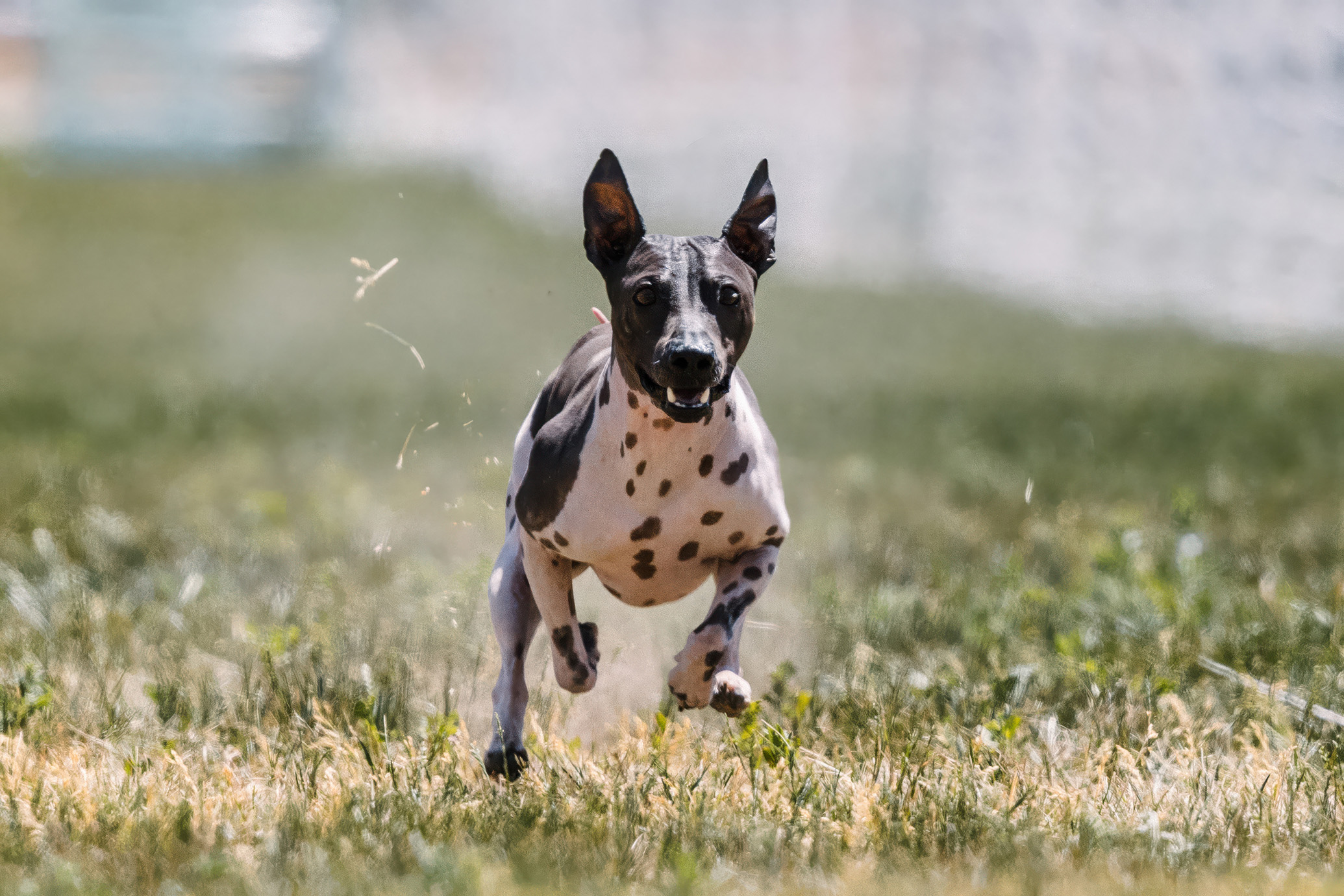
The American Hairless Terrier is a small, energetic terrier developed in the United States from Rat Terrier stock. Despite its modern recognition, it retains the classic terrier temperament: alert, curious, confident, and highly people-oriented. The breed comes in two varieties—hairless and coated—but is best known for its smooth, warm skin, which can appear in a wide range of colors and patterns.
Originally bred for vermin control, the American Hairless Terrier possesses strong prey drive, quick reflexes, and a keen intelligence. While it is fully capable of traditional terrier work such as dispatching rodents and working close to ground, it is less commonly used in harsh underground conditions compared to heavier-coated earth terriers. Instead, it excels as an active companion that enjoys games, training, and interactive work with its owner.
Temperamentally, the breed is affectionate and thrives on human interaction, often forming very strong bonds with its family. It tends to be more biddable and less hard-headed than some traditional terriers, making it well-suited for obedience, agility, and other dog sports. Early socialization helps balance its natural alertness and occasional tendency toward vocalization.
From a care standpoint, the lack of coat means minimal shedding but added responsibility. Skin protection from sun, cold, and abrasion is important, and many owners use dog-safe sunscreen or clothing when conditions demand it. Overall, the American Hairless Terrier combines the drive and intelligence of a working terrier with a companion-focused personality, making it a distinctive and versatile breed in the terrier world.
History
The American Hairless Terrier originated in the United States during the early 1970s as a natural offshoot of the Rat Terrier. In 1972, a hairless puppy was born into a litter of normal-coated Rat Terriers in Louisiana. This puppy, later named Josephine, became the foundation of the breed when breeders recognized the potential for a consistently hairless terrier developed through careful, selective breeding rather than crossbreeding.
Unlike many hairless dog breeds around the world, which are often ancient and tied to recessive health concerns or dental abnormalities, the American Hairless Terrier was intentionally developed to avoid those issues. Because the hairless trait in this breed is recessive and does not affect dentition, American Hairless Terriers retain full, normal teeth—an important distinction from breeds like the Xoloitzcuintli or Chinese Crested. Early breeders focused on maintaining the Rat Terrier’s sound structure, athleticism, and working instinct while stabilizing the hairless trait.
Throughout the 1980s and 1990s, the breed slowly gained recognition among enthusiasts, particularly families interested in a low-shedding, allergy-friendly dog that still had true terrier energy and intelligence. Breeding programs emphasized health, temperament, and versatility, producing dogs capable of hunting vermin, competing in performance sports, and thriving as companions. The coated variety was preserved to maintain genetic diversity and overall breed health.
The American Hairless Terrier achieved full recognition by the United Kennel Club in 2004 and later by the American Kennel Club in 2016, where it was placed in the Terrier Group. Today, the breed stands as a uniquely American success story—one shaped by practicality, health-conscious breeding, and a desire to preserve real terrier function while adapting to modern companionship needs.
Traditional American Hairless Terrier Roles
Appearance
American Hairless Terriers are smoothly muscled, athletic little dogs that are slightly longer than tall, giving them a balanced, functional outline. The head is wedge-shaped with V-shaped ears (often erect, but other ear carriage can occur), and the overall look is alert and ready to move.
In the hairless variety, the “coat” is really skin—often with a range of colors and patterns—while the coated variety (often called the coated carrier) has a normal short coat. Because skin is exposed, small scrapes and sun sensitivity are more relevant for hairless dogs than for many coated terriers.
Colors
• Apricot
• Black
• Black & Tan
• Black Brindle
• Black Brindle & White
• Black Sabled Red
• Black Tan & White
• Blue
• Blue & Tan
• Blue Fawn
• Blue Fawn & White
• Blue Tan & White
• Chocolate
• Chocolate & Tan
• Chocolate Brindle
• Lemon
• Lemon & White
• Lilac Dilute
• Red
• Red & Tan
• Red & White
• Red Brindle
• Red Brindle & White
• Red Sable
• Seal
• White & Apricot
• White & Black
• White & Blue
• White & Blue Fawn
• White & Chocolate
• White & Lemon
• White & Red
Health
The AHT is generally bred as an active companion, and good breeders focus on sound structure, temperament, and responsible selection within the gene pool. When choosing a puppy, look for transparent health history, veterinary documentation, and a breeder who can discuss what issues they see (and test for) in their lines.
For hairless dogs specifically, preventive care often includes managing skin injuries, keeping them warm in cold weather, and preventing sun damage. Routine wellness—maintaining a lean body condition, good dental care, and regular checkups—supports a long, comfortable life.
Care
Grooming is minimal compared to many breeds, but hairless dogs have “skin care” needs instead: routine bathing as needed, gentle moisturizing if the skin gets dry, and protection from sunburn and cold weather. Coated dogs need only occasional brushing and the usual nail, ear, and dental care.
Exercise and enrichment are the make-or-break pieces of care. Plan on daily walks and play, plus brain work (training games, puzzle feeders, scent games) to keep the terrier energy from turning into nuisance behavior around the house.
Training
American Hairless Terriers are commonly described as intelligent and trainable, and many enjoy structured activity like obedience and agility. Training tends to go best with short sessions, high-value rewards, and clear, consistent rules—especially during the adolescent “pushy terrier” phase.
Because many individuals have a strong prey/hunting instinct (inherited from Rat Terrier roots), put extra effort into recall, leash skills, and polite greetings. Early socialization and cooperative handling (for nail trims, bathing, and clothing/sunscreen routines) pays off for life.
Temperament
The AHT is typically energetic, alert, friendly, and people-oriented, with the curiosity that makes many terriers both entertaining and occasionally mischievous. Many do well with children and other household pets when socialized early and taught appropriate manners.
Terrier instincts are still there: interest in small moving things, a tendency to bark if under-stimulated, and a “busy brain” that likes a job. They generally respond well to positive training, especially when lessons are fast-paced and fun.
Lifestyle
This breed fits well with people who want a lively indoor companion that’s happy to join daily activities. They can do well in apartments if they get consistent exercise and mental outlets; without that, many terriers will “create” their own entertainment.
Hairless dogs do best when owners are comfortable with practical management: sweaters or coats in winter, shade and sun protection in summer, and sensible supervision outdoors. They usually prefer living close to their people rather than being left alone for long stretches.
Ownership
Prospective owners should be honest about whether they want a true terrier personality—busy, clever, sometimes stubborn—because the AHT is not a low-energy lapdog in a hairless body. The upside is a highly engaging companion that often excels in training and performance sports when given the chance.
Look for breeders or breed-club contacts who prioritize temperament and responsible placement, and who will coach you on early socialization and skin-care routines. Adoption can also be a great route; adult AHTs often settle quickly when their exercise and enrichment needs are met.
Interesting Facts
• Originated as a hairless variation of the Rat Terrier; a hairless female named “Josephine” (born in 1972) is the breed’s foundation.
• Comes in two varieties: hairless and coated (often called the “coated carrier”).
• UKC recognized the American Hairless Terrier as a separate breed on January 1, 2004.
• Typically described as energetic, alert, friendly, and intelligent—easy to train with the right motivation.
• Hairless dogs need protection from sun and cold, plus routine skin care.
• Many enjoy performance activities like obedience and agility, which suit the breed’s busy terrier brain.