Grand Bleu de Gascogne
Basics
The Grand Bleu de Gascogne is a large French scenthound developed to hunt in packs. It’s best known for its deep, musical bay and a methodical, endurance-based style of tracking game by scent rather than speed.
Bred for demanding work in the field, this is a purpose-built hound with a strong nose, staying power, and an independent “follow the trail” mindset. In a home setting, that translates to a dog that thrives with structure, daily activity, and safe opportunities to use its nose.
For the right owner, the breed can be a gentle, affectionate companion—but it’s not a casual, low-exercise pet. Expect a powerful dog that needs room, routine, and thoughtful management around scents, wildlife, and roaming instincts.
Description
The Grand Bleu de Gascogne is a large and strikingly beautiful scent hound from southwestern France, renowned for its incredible tracking ability and loyalty. This breed has ancient roots, tracing back to the medieval period, where it was originally used for hunting large game, including boar and deer. The Grand Bleu de Gascogne was bred specifically for its ability to work in packs, relying on its superb sense of smell to track down game across long distances. Today, it remains a beloved breed among hunters, but also makes a gentle, affectionate companion for the right owner.
Physically, the Grand Bleu de Gascogne is a tall and robust dog, standing between 25 to 29 inches at the shoulder and weighing anywhere from 70 to 110 pounds. Its coat is short, dense, and weather-resistant, typically blue with black patches, and sometimes with tan markings on the face and legs. The breed’s coat, which is a characteristic feature, gives it a striking appearance that is both elegant and rugged. The Grand Bleu de Gascogne has a distinctive, noble head with large, expressive ears and soulful eyes, contributing to its dignified expression. This breed's athletic and muscular body allows it to move with ease and stamina over rough terrain, a testament to its hunting roots.
The Grand Bleu de Gascogne is known for its remarkable sense of smell, which is one of the best among hound breeds. It has an innate ability to follow a scent trail for miles, making it an invaluable tool for hunters. Its tracking skills are complemented by a deep, melodious voice that it uses to alert its handler when it has located game. Despite its powerful and independent nature in the field, the Grand Bleu de Gascogne is generally gentle, affectionate, and loyal with its family. It can be reserved with strangers but is not typically aggressive, making it a good family dog, especially in households with experience in handling large and active dogs.
As a working dog, the Grand Bleu de Gascogne requires a lot of physical and mental stimulation. It is not a breed suited to apartment living due to its size and energy levels; instead, it thrives in rural or suburban environments where it has room to roam and a job to do. The breed enjoys regular exercise and may do well in dog sports like tracking and field trials. However, it can be independent and stubborn, so it is essential to establish clear, consistent training from an early age. Without sufficient exercise or stimulation, the Grand Bleu de Gascogne can become bored and may develop undesirable behaviors, such as barking or digging.
In conclusion, the Grand Bleu de Gascogne is a noble and hardworking hound with exceptional tracking abilities and a strong, loyal nature. While it excels in the field as a hunting companion, it can also make a loving and affectionate family dog for the right owner. With its regal appearance, excellent scenting skills, and gentle temperament, the Grand Bleu de Gascogne is a breed that is best suited to active families or individuals who are prepared to meet its physical and mental needs.
History
The Grand Bleu de Gascogne is a noble and ancient scent hound breed that originates from the Gascony region of southern France. Its history dates back to the Middle Ages, and it is widely regarded as one of the foundational hound breeds from which many modern scent hounds have descended. The Grand Bleu is believed to be a descendant of hounds brought to France by the Phoenicians and later refined through the addition of local French dogs. These dogs were originally used for hunting large game such as deer, wolves, and boar, demonstrating exceptional tracking abilities and endurance.
The breed gained prominence during the medieval period when it was favored by French nobility for its prowess in hunting. Known for its keen nose, sonorous bay, and methodical tracking style, the Grand Bleu de Gascogne excelled in both solo and pack hunting. Its striking blue-ticked coat and dignified appearance made it a favorite among hunters, and its reputation spread beyond Gascony to other regions of France.
With the decline of large game hunting in Europe during the 18th and 19th centuries, the Grand Bleu's popularity waned, as smaller game and more compact hounds became preferred. Despite this, dedicated breeders in France worked to preserve the breed’s unique qualities and historical significance. The Grand Bleu de Gascogne also influenced the development of other hound breeds, including the Bluetick Coonhound in the United States, which descended from French hounds brought to America in the 18th century.
Today, the Grand Bleu de Gascogne remains relatively rare but is cherished by enthusiasts for its rich history, hunting abilities, and noble demeanor. While it continues to be used in hunting, it has also found a place as a loyal and gentle companion in households that appreciate its heritage. The breed’s enduring legacy reflects its remarkable abilities and the dedication of those who have worked to ensure its survival through the centuries.
Traditional Grand Bleu de Gascogne Roles
Appearance
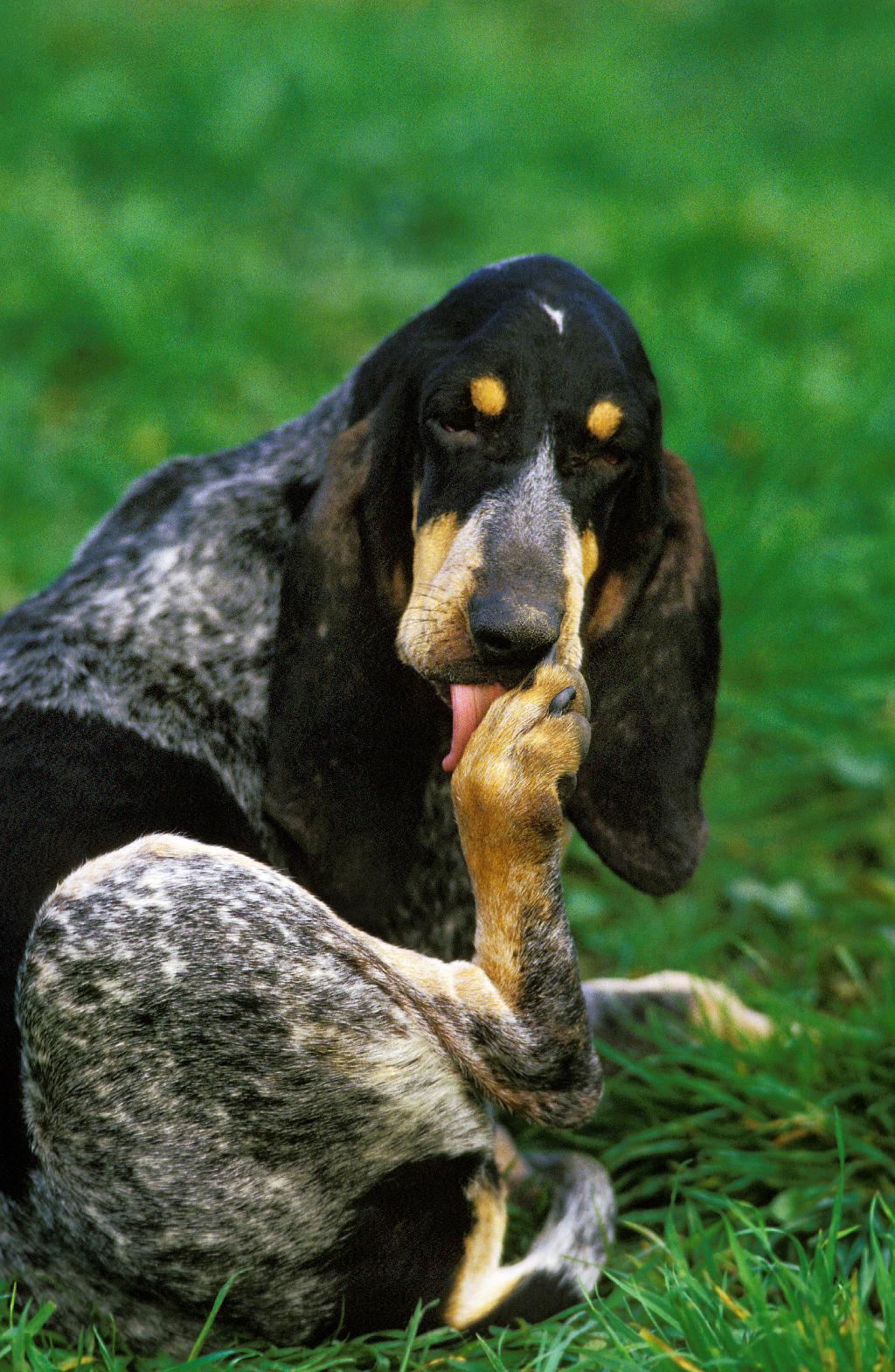
The overall look is that of an aristocratic, substantial hound: tall, long-headed, and built for long days of work. The head is long and distinguished with a pronounced occiput, pendulous lips, and low-set, fine ears that curl inward and reach to about the tip of the nose (or beyond when drawn forward).
Coat is short/smooth and dense, designed to handle weather and brush. The hallmark color is black on a white base with heavy black mottling that creates a blue (slate) effect; typical head markings include two black patches (often not meeting over the top of the skull), with tan points above the eyes and on the cheeks/legs.
Size is firmly in the large-hound category. Typical height ranges are about 25–27½ inches for males and 23½–25½ inches for females (roughly 64–70 cm and 60–65 cm). Movement should look easy and ground-covering rather than flashy.
Colors
• Black & White
• Blue & Black
• Slate Blue
• Tricolored
• White w/Tick
Health
As a large, athletic breed, the Grand Bleu de Gascogne benefits from routine preventive care: keeping a healthy body condition, building fitness gradually, and avoiding sudden high-impact exercise in young dogs while joints are still developing.
Like many deep-chested hounds, they may be at increased risk for gastric dilatation-volvulus (bloat). Discuss prevention strategies with your veterinarian (meal management, avoiding heavy exercise right around meals, and whether gastropexy is appropriate for your dog).
Working-style conformation also means you should watch for common hound issues such as ear infections (from long ears and outdoor debris) and wear-and-tear injuries from rough terrain. Regular checkups and prompt attention to limping, soreness, or chronic itchiness help keep them field-ready.
Care
Daily exercise is non-negotiable. Plan on long walks, hiking, and especially scent-based enrichment (tracking games, nosework, “find it” searches) to satisfy the breed’s instincts; simply running around the yard is rarely enough.
Grooming is straightforward: the short coat typically needs only occasional brushing and regular checks after time in brush or fields. Pay extra attention to the ears—long, low-set ears can trap moisture and debris—so gentle cleaning and prompt treatment of irritation is important.
Because many individuals are food-motivated, portion control matters. Keep the hound lean and fit, and use feeding puzzles or training rewards strategically so calories don’t quietly creep up.
Training
Training should start early and stay consistent. Focus first on manners, leash skills, and impulse control, because a large, powerful hound that pulls toward every scent is hard to manage.
Use positive reinforcement and keep sessions short and interesting. Scenthounds often respond best when you make the work “worth it” (food, play, or access to sniffing) and when you avoid repetitive drilling.
Recall and off-leash reliability are lifelong projects. Many owners do best using long lines, fenced areas, and structured scent outlets rather than expecting a Grand Bleu de Gascogne to ignore a trail once it’s engaged.
Temperament
In temperament, the Grand Bleu de Gascogne is generally gentle and kind, with a steady, even nature. Many are friendly with people, and because the breed was developed to work closely with other hounds and handlers, stable social behavior is an important part of “type.”
That said, this is still a working scenthound. Outdoors, the nose can “switch on” quickly, and a compelling track may matter more than your recall cue—so reliability off-leash should never be assumed.
At home, they tend to do best with calm, consistent leadership and predictable routines. Without enough exercise and enrichment, boredom can show up as baying, restlessness, or determined attempts to follow interesting smells.
Lifestyle
This breed fits best with an active, outdoorsy household that enjoys long walks and has time for training and enrichment. Apartment living can work only with serious daily exercise and noise-awareness—baying is part of the package.
A secure yard and strict door/gate habits are important. Scent-driven roaming is a real risk, so fencing should be sturdy, and off-leash time should be reserved for safely enclosed areas.
They often do well with another dog, especially if properly socialized, but the home environment needs to be calm and structured. If you’re away all day with little time for exercise, this is usually not a good match.
Ownership
Owning a Grand Bleu de Gascogne is closer to owning a working partner than a decorative pet. The most successful owners embrace the breed’s purpose: they provide outlets for scent work, accept a certain amount of hound voice, and manage the dog’s independence with training and smart boundaries.
Choose a breeder (or rescue) that prioritizes stable temperament and functional structure, and be honest about your tolerance for drool, muddy paws, and the occasional “hound opinion.” Early socialization, ongoing training, and veterinary partnership are key.
If you want a big dog that reliably stays close off-leash and is content with brief potty walks, look elsewhere. If you want a noble, mellow-at-home hound with serious outdoor drive and a remarkable nose, this breed can be deeply rewarding.
Interesting Facts
- Large French pack scenthound known for a deep, melodious bay.
- Distinctive blue-mottled coat pattern: black-on-white mottling that creates a slate-blue effect, usually with tan points.
- Low-set, thin ears that curl inward are a defining feature.
- Typically hunts in a steady, methodical way with strong endurance rather than sprint speed.
- Height is commonly around 25–27½ in (males) and 23½–25½ in (females).
- Does best with secure fencing and leash/long-line management due to strong scent-following instincts.