
Mountain Cur
Basics
The Mountain Cur is a versatile American hunting and tree dog developed in rural, mountainous regions of the United States. It was traditionally expected to do practical work—locating and treeing game, trailing, and helping protect the homestead—rather than be bred strictly for looks.
Modern Mountain Curs are still valued first as capable working dogs. They tend to be agile, tough, and vocal enough to signal a handler from distance, and many lines are used on squirrel and raccoon as well as larger game depending on local practice.
Description
The Mountain Cur is a rugged and versatile breed of working dog, originally developed in the Appalachian and Southern United States for hunting, herding, and guarding. This breed is deeply rooted in American history, with settlers relying on its intelligence, strength, and resilience to help carve out a life in challenging, rural landscapes. Known for its exceptional hunting skills, particularly in treeing game like raccoons and squirrels, the Mountain Cur remains a favorite among hunters and outdoor enthusiasts who appreciate its drive, stamina, and loyalty.
Physically, the Mountain Cur is a medium-sized dog with a muscular and athletic build. They typically weigh between 30 and 60 pounds and stand about 16 to 26 inches tall at the shoulder. Their short, dense coat comes in a variety of colors, including brindle, black, yellow, and blue, often with white markings. This coat is low-maintenance and provides some protection against harsh weather, making the breed well-suited for outdoor work. Their strong legs, keen eyes, and alert expression underscore their readiness for action, whether it be chasing game, herding livestock, or guarding the homestead.
Temperamentally, Mountain Curs are known for their intelligence, bravery, and intense work ethic. They form strong bonds with their families and are highly protective, making them excellent watchdogs. While they are friendly and affectionate with their owners, they can be reserved with strangers, a trait that enhances their effectiveness as guardians. Mountain Curs are highly trainable but require consistent, firm leadership and plenty of mental and physical stimulation to thrive. Their high energy levels and innate drive to work mean they are best suited to active households or those with a purpose for the dog, such as hunting or farm work.
One of the Mountain Cur's most notable traits is its hunting prowess. Bred for generations as a treeing and trailing dog, the Mountain Cur has an acute sense of smell and an incredible ability to locate and tree game animals. They are also skilled in hunting larger game such as wild boar and can adapt to various terrains and hunting conditions. Beyond hunting, their versatility extends to herding livestock and even serving as search-and-rescue dogs due to their intelligence and determination.
In summary, the Mountain Cur is a hardworking and loyal breed with a storied history as a quintessential American working dog. Its strength, intelligence, and adaptability make it an excellent companion for hunters, farmers, and active families. Whether treeing game in the woods or protecting its family, the Mountain Cur exemplifies dedication and resilience, traits that have solidified its place as a treasured breed in rural and outdoor communities.
History
The Mountain Cur is a rugged and versatile American breed with deep roots in the history of early settlers in the Appalachian and Ozark Mountains. Brought to North America by European immigrants in the 18th and 19th centuries, these dogs were bred to help families survive in the harsh frontier environment. Their primary roles included hunting small game such as squirrels and raccoons, herding livestock, and protecting families and property from predators. The breed’s name, “Cur,” refers to its working-dog origins rather than any negative connotation, signifying its status as a dependable and functional dog.
Mountain Curs were prized for their agility, intelligence, and unwavering loyalty, traits that made them essential companions in the wilderness. Settlers relied on these dogs for hunting meat for the table, controlling vermin, and serving as an all-purpose working dog. The breed’s versatility allowed it to adapt to a variety of tasks, and its tenacious hunting instincts made it particularly effective in tracking and treeing game. Mountain Curs were bred for function over form, resulting in a breed with considerable variation in size and appearance but consistent working ability.
By the mid-20th century, the Mountain Cur faced a decline as rural communities modernized and the need for traditional working dogs diminished. However, a dedicated group of enthusiasts formed the Original Mountain Cur Breeders of America (OMCBA) in 1957 to preserve the breed’s heritage and working traits. This organization helped formalize breed standards and ensure that the Mountain Cur remained true to its origins as a dependable and hardworking dog.
Today, the Mountain Cur is celebrated for its intelligence, drive, and loyalty. While it remains a popular choice among hunters for its hunting and tracking abilities, it has also found a place as a devoted family companion for those who appreciate its active nature and rich history. The Mountain Cur’s story is a testament to its role in shaping the lives of early American settlers and its enduring legacy as a symbol of resilience and adaptability.
Traditional Mountain Cur Roles
Appearance
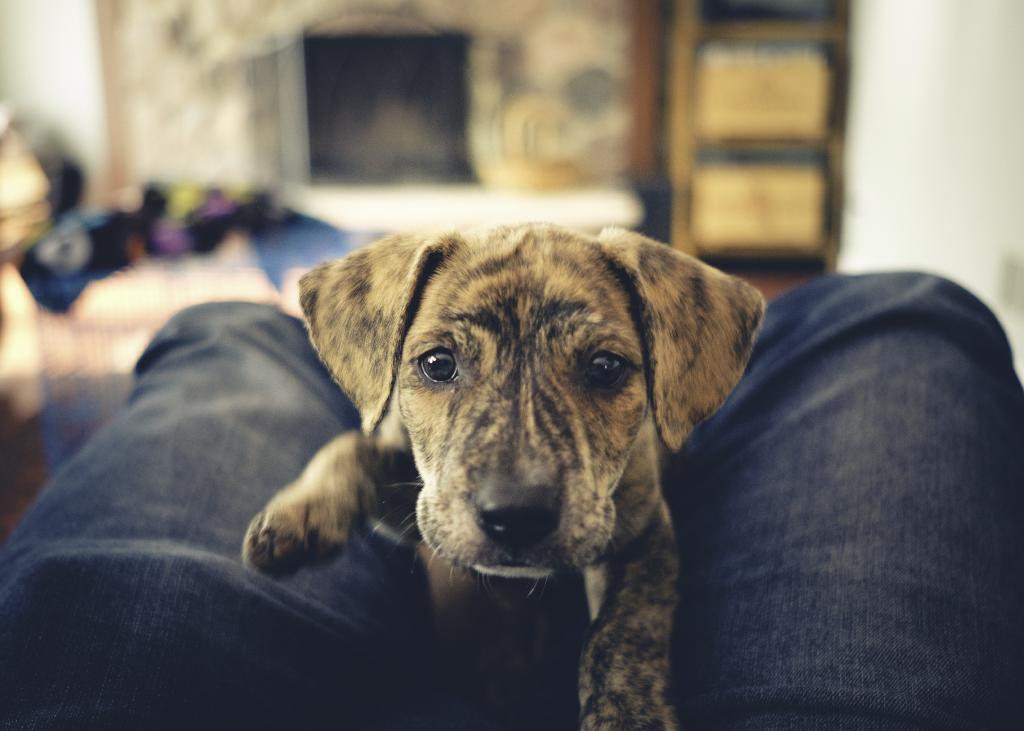
Mountain Curs are medium-sized, powerfully built dogs with a square to slightly off-square outline. The head is broad with a moderate stop, the muzzle is slightly shorter than the skull, and the ears are set high and drop.
The coat is short and close, and may be smooth or slightly rough in texture with a dense undercoat. Colors are varied (including black, brindle, brown, red, yellow, and buckskin tones), often with limited white markings. The tail may be full length or naturally bobbed, and working scars are common and not unusual for the breed.
Colors
• Black
• Black Brindle
• Blue
• Brindle
• Brown
• Brown Brindle
• Red
• Red Brindle
• Tan
• Tan Brindle
• Yellow
• Yellow Brindle
Health
As a population of utilitarian, active dogs, Mountain Curs are generally expected to be sound and durable, but individual risk still depends on line and lifestyle. Like many medium-to-large athletic breeds, they may be susceptible to orthopedic issues (such as hip problems) and soft-tissue injuries from high-impact activity.
Routine preventive care is especially important for working dogs: parasite control, vaccination appropriate to exposure risk, dental hygiene, and prompt attention to cuts, punctures, and tick-borne disease concerns. When choosing a puppy, ask breeders about health history in their lines and what they do to screen breeding stock.
Care
Coat care is usually straightforward: a weekly brush or curry glove helps remove dead hair and keeps the coat tidy, with baths as needed after mud, brush, or hunting trips. Check ears regularly, especially in active dogs that run through heavy cover, and keep nails trimmed for traction and sound movement.
Because this is a working, athletic breed, daily conditioning is part of “care,” not optional. Provide consistent exercise and mental work, and watch for scrapes, burrs, and paw wear after time in rough terrain.
Training
Mountain Curs are typically quick learners, but they do best with training that is clear, fair, and consistent. Strong prey drive and independence can show up as selective hearing outdoors, so reliable recalls and leash manners should be taught early and refreshed often.
They often thrive when training is tied to a job—tracking games, scent work, structured hikes, or field time—rather than repetitive drills. The breed standard notes they respond better to training when they have lots of human contact, so short, frequent sessions and a solid relationship usually outperform harsher methods.
Temperament
A well-bred Mountain Cur is intelligent, driven, and task-focused outdoors, with strong hunting and treeing instincts. Many are bold and determined on game, yet they tend to respond best to a handler they know well and interact with often.
In the home, they commonly settle into loyal, watchful companions—often alert to strangers and quick to bark if something seems off. Early socialization matters: their intensity and confidence can translate into pushy behavior if boundaries, structure, and positive outlets for their energy are missing.
Lifestyle
This breed fits best with people who enjoy an active, outdoor lifestyle and can provide daily outlets for drive—long walks, hiking, training games, or working opportunities. Without enough purposeful activity, a Mountain Cur can become noisy, restless, or destructive.
They typically do better with room to move and a predictable routine than with long hours of idle time. Secure fencing and supervision are important, since scent and movement can trigger chasing and roaming if opportunities arise.
Ownership
Prospective owners should be comfortable living with a high-drive dog that was developed for real work. The right Mountain Cur can be an affectionate family companion and a serious partner in the woods, but it’s not usually a “low-key” pet that is content with a quick backyard break.
Look for breeders or rescues that can explain the dog’s line and typical working traits, and be honest about what you want—companion, hunting partner, or both. Plan on investing in training, socialization, and daily exercise, and consider the realities of a vocal alert dog if you live close to neighbors.
Interesting Facts
- Declared a distinct breed in 1957 with the formation of the Original Mountain Cur Breeders of America (OMCBA).
- Recognized by the United Kennel Club (UKC) on November 1, 1998.
- Bred as a versatile tree dog; commonly used on squirrel and raccoon and sometimes larger game.
- Coat is short and dense; can be smooth or rough, with many accepted colors.
- Tail may be full length or naturally bobbed; working scars are common in active dogs.