
Australian Shepherd
Basics
The Australian Shepherd is a high-energy, highly trainable working dog developed for herding and ranch life. Despite the name, the modern breed story is closely tied to the United States, where Aussies became fixtures on ranches and rodeo circuits.
They’re bright, athletic, and people-focused, typically forming strong bonds with their family. An Aussie is happiest when it has daily exercise plus a real role—training, sports, farm chores, or structured “jobs” around the home.
Description
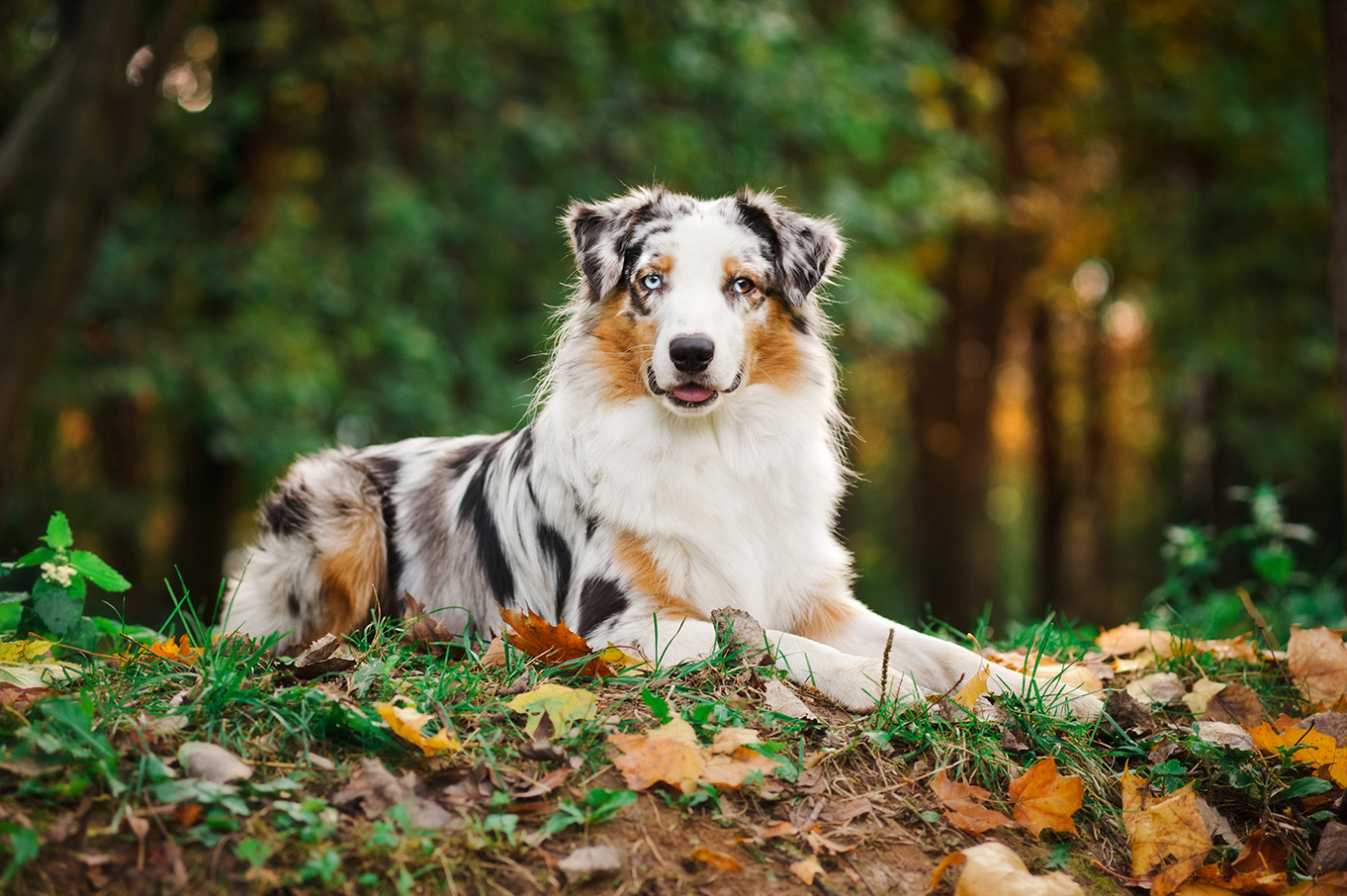
The Australian Shepherd, often called the "Aussie," is a highly energetic and intelligent herding dog known for its agility, versatility, and strong work ethic. Despite the name, the breed was actually developed in the United States to work on ranches and farms, particularly in the western regions, where it became a favorite among cowboys and farmers. Australian Shepherds are medium-sized with a distinctive coat that comes in a variety of colors, including blue merle, red merle, black, and red, often with white or tan markings. They also have expressive eyes that can be blue, brown, or even both colors.
Australian Shepherds are prized for their intelligence, trainability, and natural herding instincts, making them ideal working dogs and popular in dog sports like agility, obedience, and frisbee. They form strong bonds with their families and are known for their loyal and affectionate nature, although they can be a bit reserved with strangers. Due to their high energy levels and need for mental stimulation, Aussies are best suited for active households where they can have a job or activity, such as running, hiking, or training exercises. With proper training and regular exercise, Australian Shepherds make wonderful companions for those who appreciate their lively, loyal, and hardworking nature.
History
The name “Australian Shepherd” is something of a misnomer for this versatile herding breed. While the Australian Shepherd’s recent ancestry does include sheepdogs that passed through Australia, the breed as we know it today actually developed in the western United States. Its roots can be traced back to the late 19th and early 20th centuries, when ranchers in states like California, Colorado, and Idaho were in need of a smart, agile, and hardworking dog that could handle various livestock—especially sheep—in rugged terrain.
Some of the breed’s forebears were believed to have come from the Basque region of Europe, where shepherds had used nimble dogs for centuries. These Basque shepherds migrated to Australia, working on sheep stations before eventually relocating to the American West. The dogs they brought with them—perhaps mixed with other European herding dogs encountered along the way—gave rise to the early foundation of what would become the Australian Shepherd. Over time, Western ranchers continued to refine these dogs, selectively breeding for intelligence, stamina, and a natural instinct to herd.
By the mid-20th century, the Australian Shepherd had become a fixture on American ranches and rodeos. Their aptitude for herding, combined with their trainability, made them invaluable working partners. Word of the “little blue dogs,” as some called them, spread among livestock owners, and their popularity began to grow. It wasn’t until after World War II, however, that the breed found broader recognition outside the ranching community. Rodeo performances and trick-dog exhibitions, including those by Jay Sisler and his Aussies, introduced the breed’s remarkable athleticism and intelligence to audiences across the country.
In 1957, the first Australian Shepherd registry was established to preserve the breed’s working heritage. These efforts culminated in the American Kennel Club (AKC) granting official recognition to the Australian Shepherd in 1993. Despite the relatively late formal recognition, the Aussie’s star continued to rise, particularly as a companion animal and competitive dog in agility, obedience, and other sports. Today, the Australian Shepherd retains its strong herding instinct and work ethic, while its engaging personality and striking appearance have made it a beloved family dog around the world.
Traditional Australian Shepherd Roles
Appearance
Australian Shepherds are medium-sized, well-balanced, and slightly longer than tall, with a muscular build and moderate bone. They should look agile and capable of quick changes of direction, reflecting their working purpose.
The coat is medium length and weather resistant, straight to slightly wavy, with an undercoat that can vary by season. Common colors include black, red, blue merle, and red merle, each with or without tan points and limited white markings depending on the standard.
Colors
• Black
• Black Tri-Color
• Blue Merle
• Merle
• Red
• Red Merle
• Red Tricolor
Health
Aussies are generally sturdy, but responsible ownership includes preventive care and breed-appropriate screening based on pedigree. Work with your veterinarian and breeder/rescue on plans for eye health, orthopedic soundness, and maintaining a lean, athletic condition.
Because they’re so active, overuse injuries can happen if conditioning is rushed. Build intensity gradually, prioritize good footing and warm-ups for sport dogs, and address any limping or reluctance to jump/run promptly.
Care
Expect to provide daily physical exercise plus mental work. Aussies do best with a mix of brisk walks/runs, training sessions, and enrichment like scent games, agility-style obstacles, or herding-related activities.
Grooming is moderate: regular brushing to prevent mats (especially behind ears, ruff, and feathering), plus seasonal coat blowouts. Keep nails trimmed, ears clean, and teeth maintained; active dogs also benefit from routine paw and joint checks.
Training
Australian Shepherds usually learn quickly and enjoy precision work, but that same intelligence can create nuisance behaviors if training is inconsistent. Start early with impulse control, calm greetings, and a reliable recall, and teach a strong “settle/off switch” so the dog can relax indoors.
Positive reinforcement and clear criteria work extremely well for this breed. If herding behaviors show up as nipping or chasing, redirect into structured games and reinforce appropriate outlets rather than punishing the instinct.
Temperament
A typical Aussie is loyal, attentive, and animated—an “all-in” partner that wants to be involved. Many have natural herding and guarding instincts, so they can be watchful and may try to manage movement (kids running, bikes, other pets) if not taught appropriate behavior.
They often show some initial reserve with strangers but should not be shy or aggressive. Early socialization and confidence-building experiences help them become stable, polite adults in busy modern settings.
Lifestyle
This is a breed for active households. Aussies often excel in dog sports, working ranch roles, and homes where they can spend lots of time with their people rather than being left alone for long stretches.
They can adapt to suburban or even apartment living if exercise and enrichment are truly consistent, but they are not low-maintenance. Without a plan, their energy and alertness can turn into constant motion, barking, or obsessive behaviors.
Ownership
Choose an Australian Shepherd if you want a smart, engaged teammate and you’re ready to provide daily structure. Clear boundaries, regular training, and managed social experiences are essential, especially during adolescence when intensity peaks.
When selecting a dog, look for stable temperament and soundness over extremes. Ask about reactivity, sensitivity to noise/novelty, and how the dog handles being off-duty—an Aussie that can relax is far easier to live with.
Interesting Facts
- A working herding breed strongly associated with American ranch and rodeo culture.
- Medium-sized, balanced, agile build; slightly longer than tall.
- Weather-resistant, medium-length coat; common colors include black/red and blue/red merle.
- Often loyal and attentive, with natural herding and guarding instincts.
- Many show initial reserve with strangers but should not be shy or aggressive.
- Needs daily exercise plus mental work; thrives with training and a “job.”